#WhatItsLike: Top forensic pathologist on his career at the autopsy table

#WhatItsLike: Top forensic pathologist on his career at the autopsy table

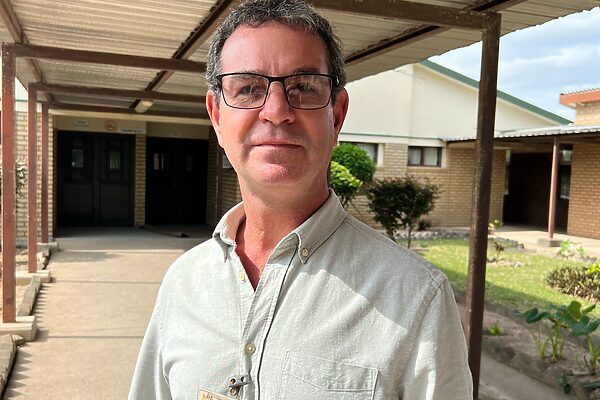
Attending the Forensic DNA Symposium recently held in Cape Town where the vital role of DNA analysis in criminal investigations was highlighted, Sue Segar caught up with Professor Ryan Blumenthal, a senior specialist forensic pathologist at the University of Pretoria. Blumenthal was one of the speakers. He told her more about bearing first-hand witness to death and its causes at the autopsy table and what this can tell us about the society we live in.

Read More

OPINION: With the right interventions we can help many more men start and stay on HIV treatment

OPINION: With the right interventions we can help many more men start and stay on HIV treatment

June is Men’s Health Month and while the focus is on men’s attitudes about their health, we have also been reflecting on the health sector’s attitudes about men. Men are not indifferent about their health and they are not inherently poor health-seekers. If many of them are avoiding healthcare services, let’s consider that it may be because they are not getting what they need from the healthcare system, writes Shawn Malone.

Read More

Mpumalanga health department responds to latest clinic monitoring findings

Mpumalanga health department responds to latest clinic monitoring findings

According to the latest report from community-based clinic monitoring group Ritshidze, users of public sector health facilities in Mpumalanga are experiencing shorter waiting times, cleaner facilities, and extended antiretroviral refills compared to previous years. But Ritshidze also reports ongoing staff shortages, problematic staff attitudes, and problems with infrastructure. Nthusang Lefafa unpacks the new findings and asks the province’s health department what they are planning in response.

Read More

Analysis: Taking a spoon to a knife fight – Is SA ready for rising obesity rates?

Analysis: Taking a spoon to a knife fight – Is SA ready for rising obesity rates?

Experts describe rising obesity rates in South Africa as an “urgent crisis”, “a tsunami” – even an “epidemic” – that is costing lives, not to mention billions of rands. Tackling the situation warrants an action plan that is as comprehensive and cogent as the problem is dire. But does the new national strategy fit the bill? Amy Green asked several local experts.

Read More

RIGHT OF REPLY: Reducing the surgical and cancer treatment backlogs is an urgent priority

RIGHT OF REPLY: Reducing the surgical and cancer treatment backlogs is an urgent priority

Following an article in Spotlight bemoaning “the lack of urgency” by the Gauteng Department of Health in addressing cancer and surgical backlogs despite having been allocated funds toward this, Dr Stephen Mankupane, Acting Head of Hospital Services in the provincial health department, writes that there is no disputing the fact that there is a need to act with urgency in attending to these backlogs and outlines what the department is doing. Here is his response in full.

Read More

Sobering moments at opening of SA AIDS Conference

Sobering moments at opening of SA AIDS Conference

The 11th South African AIDS Conference – the first since COVID-19-related disruptions – kicked off on Tuesday in Durban. This year’s theme is, “Act, Connect and End the Epidemic”. Spotlight summarises some key themes that emerged from the opening ceremony and spoke to some delegates.

Read More

In-depth: Why is the Northern Cape missing its TB targets?

In-depth: Why is the Northern Cape missing its TB targets?

In March this year, the director-general of the Northern Cape government, Justice Bekebeke during a parliamentary oversight visit acknowledged that about 80% of the health facilities in the province did not meet their performance targets of finding people with tuberculosis and helping them complete treatment. Refilwe Mochoari looked at the statistics and spoke to several roleplayers about why the province is missing its TB targets.

Read More

90-60-50: Can SA meet its diabetes targets, and would we know if we do?

90-60-50: Can SA meet its diabetes targets, and would we know if we do?

Diabetes rates in South Africa are anticipated to keep rising in the coming years as the country’s health burden slowly shifts away from infectious diseases such as HIV and tuberculosis toward non-communicable diseases. The relevant government strategy sets three key diabetes targets. Elri Voigt spoke to several local experts about these targets and South Africa’s prospects of meeting them.

Read More

In-depth: What it means to build genomics capacity in Africa

In-depth: What it means to build genomics capacity in Africa

During the COVID-19 pandemic, we saw the remarkable power of genomics in helping us keep track of new viral variants. Several scientists argue that Africa should continue to invest in genomics to support disease control and public health. Sue Segar asks what this means in practice and why it is considered so critically important.

Read More

Hospital histories: 151 years later, the drumming of little feet at Brooklyn Chest Hospital

Hospital histories: 151 years later, the drumming of little feet at Brooklyn Chest Hospital

In 1984, the then-head of Brooklyn Chest TB Hospital, Dr David Jenkin lamented inadequate services for TB patients, writing that “it is unflattering to realize that only war and pestilence appear able to bring more beds for TB sufferers”. Almost 40 years later, despite major scientific advances, TB hospitals like Brooklyn Chest remain important for treating complicated forms of the disease, where specialised healthcare staff can monitor medication interactions and side-effects. Biénne Huisman takes a look back at the hospital’s 151-year history and the difference it is making in the lives of children with TB today.

Read More

Community-based testing boosts diagnosis of infectious TB, study finds

Community-based testing boosts diagnosis of infectious TB, study finds

Every year, tens of thousands of people who fall ill with tuberculosis in South Africa are not diagnosed. Because of this, there has been much focus on testing people earlier rather than waiting for them to show up at clinics when they are already sick. One potential solution, explored in a trial called XACT 2, is community-based testing using a point-of-care molecular test. Tiyese Jeranji spoke to experts involved with XACT 2 and unpacks the study’s findings that were recently published in Nature Medicine.

Read More

Antibiotic-resistant bugs claim over 200 000 infants globally per year, finds major study

Antibiotic-resistant bugs claim over 200 000 infants globally per year, finds major study

A landmark global observational study found that many neonates get life-threatening bloodstream infections, or sepsis, and are dying because the antibiotics used to treat them are not effective. Sepsis affects up to 3 million babies a year globally and the study authors estimate that 214 000 newborns die every year from sepsis that has become antibiotic resistant – mainly in low- to middle-income countries. Adele Baleta reports.

Read More