
‘I’m serving my people’: The pastor running a rural clinic that treats more than illness
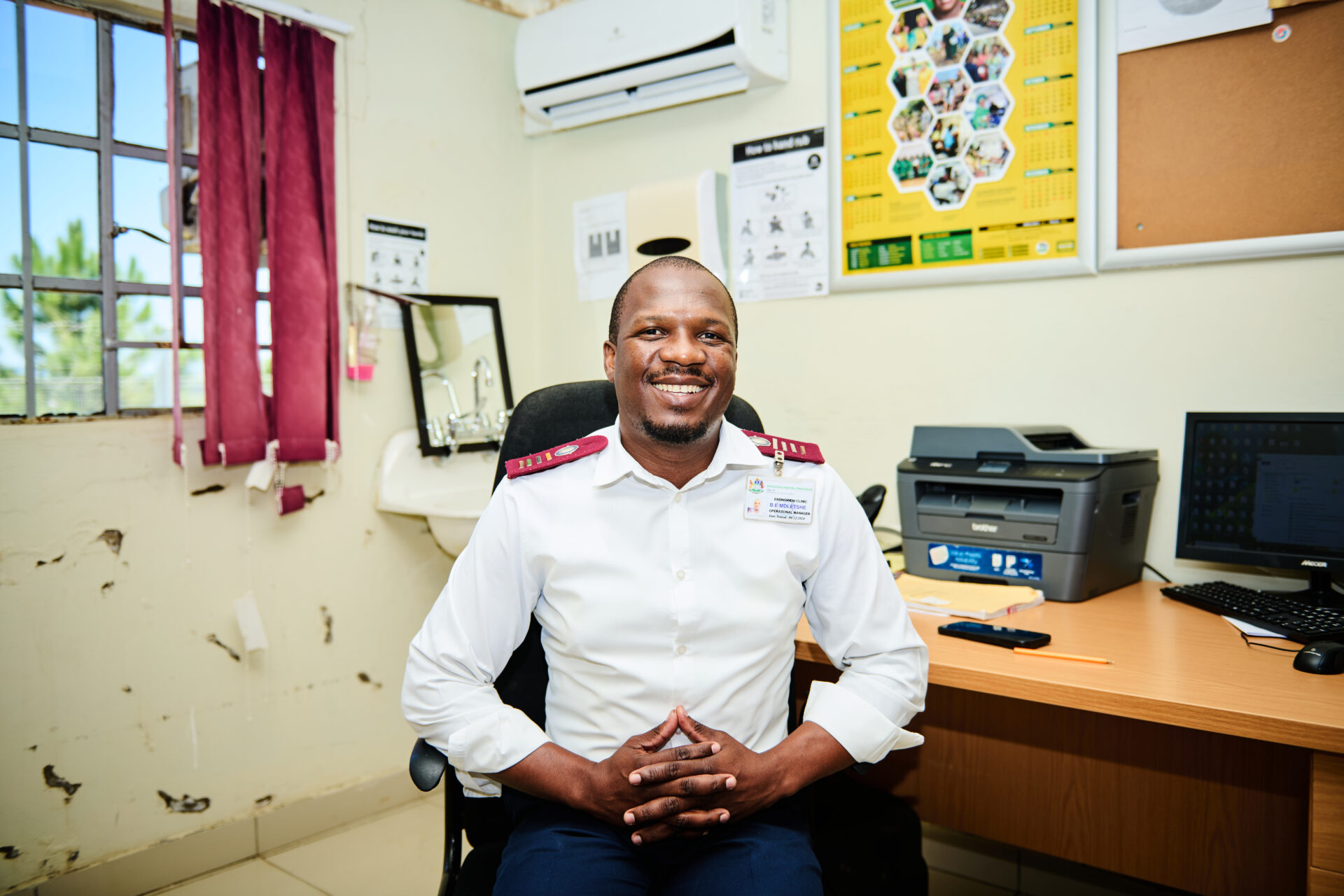
 Bukhosi Mdletshe, operational manager of the Ensingweni Clinic in KwaZulu-Natal, oversees care for a widely dispersed rural community. (Photo: Thom Pierce/Spotlight)
Growing up as the son of a single mother in the rural community of Ensingweni in KwaZulu-Natal, Bukhosi Mdletshe encountered the warm embrace of his community, including some key male role models who helped him navigate life as a young man. Now, having trained as a nurse, he is back home, working as clinic manager at the Ensingweni clinic, and in his words, paying his dues to the community that raised him. Sue Segar and Thom Pierce spent some time with Mdletshe for Spotlight’s Rural Health Heroes series.
Bukhosi Mdletshe, operational manager of the Ensingweni Clinic in KwaZulu-Natal’s King Cetshwayo District, is standing high up on a rise on the side of a dusty road.
“These are all our people,” he says. He makes a sweeping gesture, across a landscape of hills and valleys dotted with the small homes that characterise this very rural countryside between Gingindlovu and Empangeni, located approximately 60km apart. The small clinic, located in the north-eastern region of KwaZulu-Natal serves around 12 000 people, many scattered across the surrounding countryside.
“See there,” he says, pointing at a circular house, made of concrete bricks, “an old woman lives in that house. She won’t leave because her husband and forefathers are buried there. She lives far from the clinic and has no way to get there. So, we visit her.”
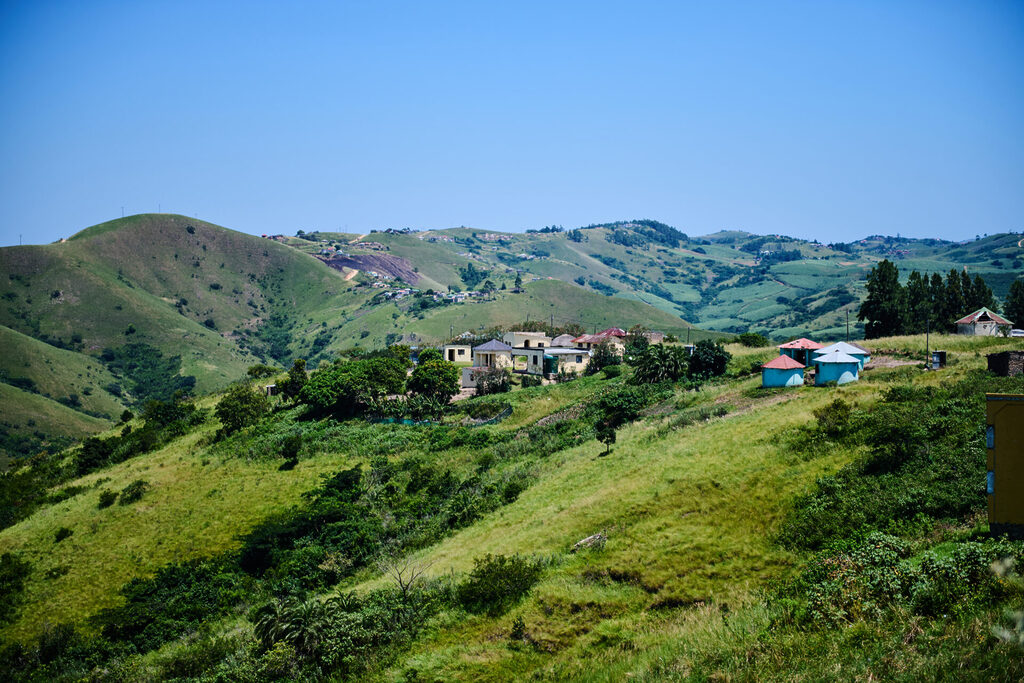
Mdletshe points to another home. “That’s a child-headed household. We need to check that they are going to school.” Showing us another home down in a valley, he tells us an elderly woman living there is defaulting on her medication. “We need to check on her,” he says.
Long distances
While HIV rates are very high, as in much of the province, most people here with HIV are taking treatment and Mdletshe says 96% of those on treatment have the virus suppressed in their bodies. “We also have quite high rates of hypertension and diabetes in older people,” he says.
“A major problem around here is that patients default on treatment and this is largely because of the distances they have to travel for healthcare. It can be a simple case of not having bus fare to get treatment or fetch medication,” he says.
The clinic is in an old building with fittings reminiscent of the nineteen-eighties. It is a busy, bustling place, with patients ranging from mothers with tiny babies to the very elderly waiting in orderly queues. It operates on weekdays and includes an emergency section for acute cases. Twice a week, a medical doctor attends to patients requiring advanced assessments or adjustments to their treatment plans.
“There’s a good team spirit among staff, including cleaners and security guards. People get along and although there are days when the number of people to attend to is overwhelming, they manage, and care for each other,” says Indira Govender, a contracted GP who visits the clinic once a week.
Mdletshe says he insists that clinic staff go beyond merely “dishing out tablets” and consider the wider impact of their work. “It’s about asking if a person is well – psychologically, mentally, and physically. It’s about asking, ‘do you have something to eat at home?’”
Meeting people where they live
In a rural setting like this, Mdletshe says the distance to Ensingweni clinic and Catherine Booth Hospital is a major barrier to accessing healthcare services. “Ambulances take a long time to come, and the hospital is not nearly as accessible as it might be in a city…. The people who don’t have money must walk to the clinic. Imagine an 85-year-old person walking this distance,” he says.
This is why, from Monday to Thursday, 12 community healthcare workers employed by the clinic head out on foot to at least 60 households. “Sometimes it’s more like 150 households. We have a shortage of health workers,” says Mdletshe.
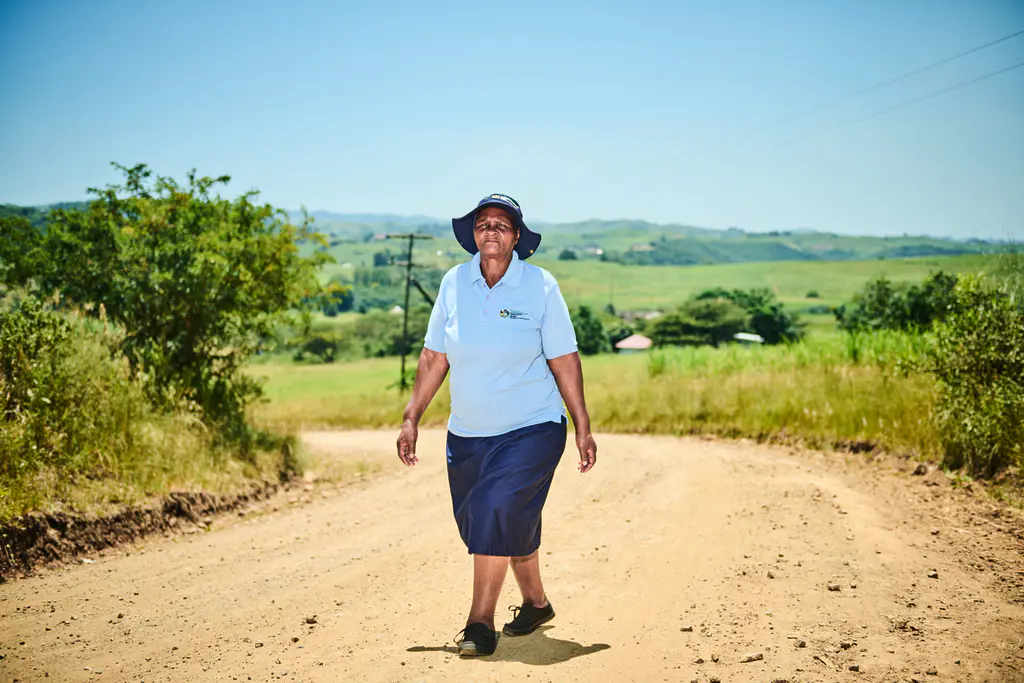
“We visit pregnant women and young mothers with new babies to see how they are coping and to help them with breastfeeding,” says Nombuso Nzuza, one of these 12 community healthcare workers. “We weigh and measure the babies to check that they are developing properly. We monitor children’s immunisations, test people for TB, and ensure TB patients are taking their treatment. We also visit elderly people, especially those living alone, to make sure they are taking their medication. We constantly check on patients who have been defaulting on their treatment.”
Each of the 12 healthcare workers look after a designated area and spend much of the day on foot criss-crossing long distances from home to home. “If it’s really far, and when it’s necessary, we visit clients by car,” says Mdletshe.
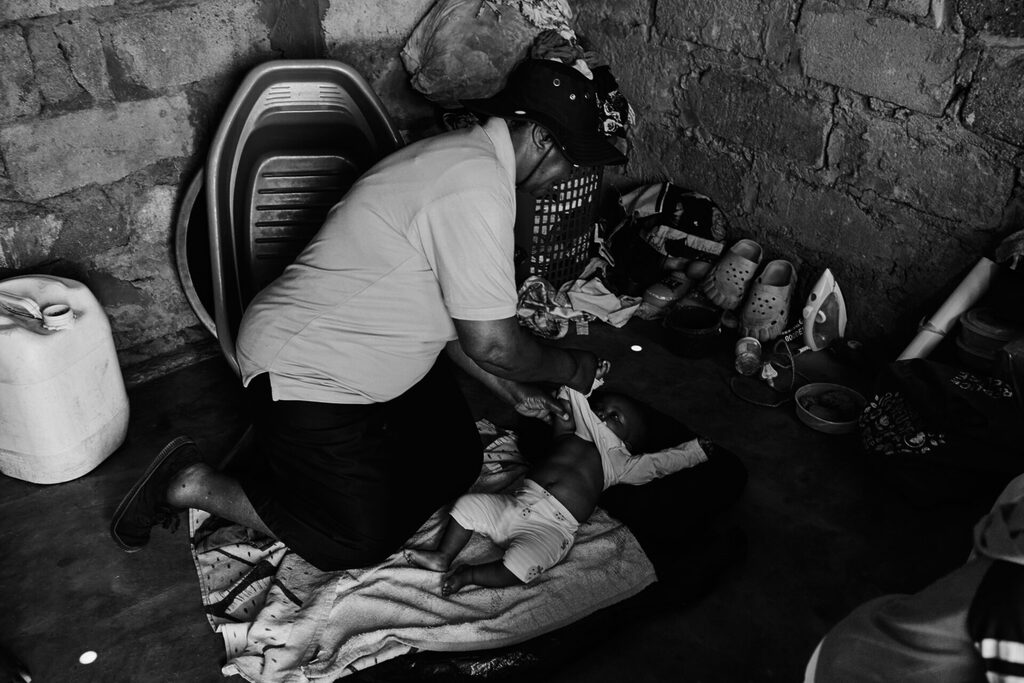
It’s a Friday afternoon, and Spotlight is joining Mdletshe and Nzuza on home visits. Nzuza, known to all as MaDlamini, is a familiar face in the area, having been part of the government initiated home-based care programme since it started more than a decade ago.
For Mdletshe, one-handedly steering the vehicle along winding gravel roads, it’s also a tour of his home. He’s lived here since he was a child and knows its landscape, history, and people. Besides managing the clinic, he’s a pastor in the Apostolic Church of South Africa.
A family living in a single-roomed shack
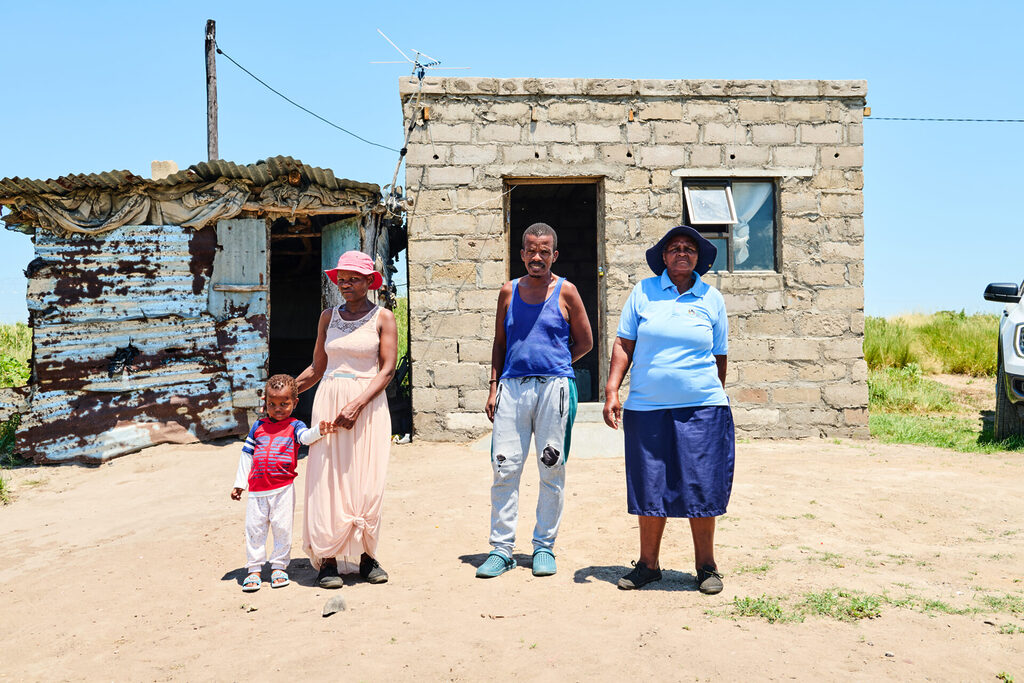
After a long drive, rising into the folding hills and small farm steads, we arrive at the home of a family who Nzuza came across during her home visits. Until recently, the family of seven were living in a single-roomed shack, built of broken corrugated iron and supported by wooden poles. “They had applied for a house, but the government was taking too long,” says Nzuza who is here to check on the whole family’s health.
Inside the corrugated iron home, Mdletshe points to a tangle of electrical wires tied to a pole underneath a piece of the roof which has numerous holes in it – a hazard if it rains.
“When MaDlamini brought me here, we found the whole family was cooking and sleeping in here – mom, dad and four kids…. After that visit, I couldn’t sleep well, especially thinking of what happens when it rains,” he says.
Mdletshe says he took up the matter with his church board who resolved to build the family an extra room. “Church members donated money and materials, and a team of builders organised by the church spent two weeks building,” he says.
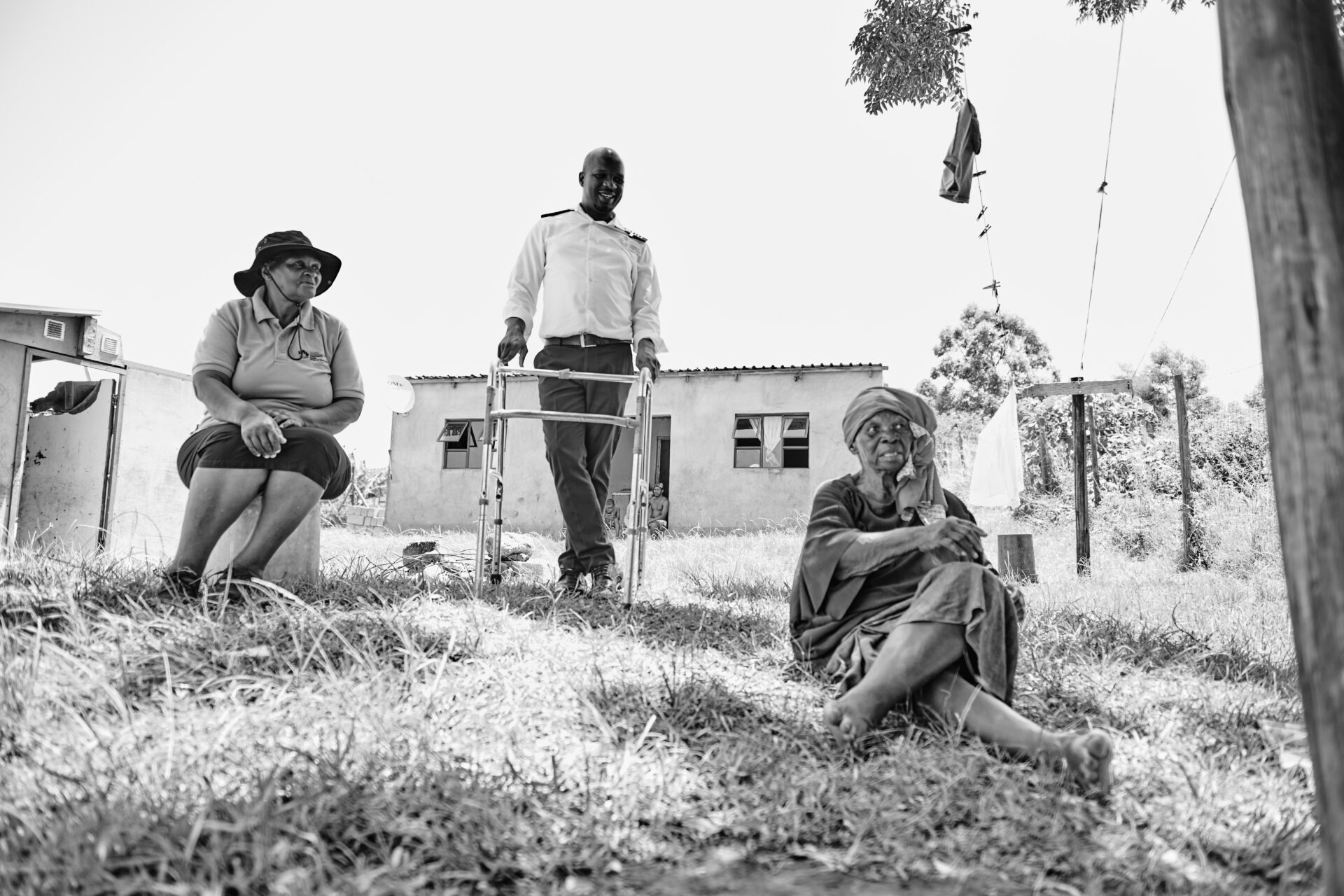
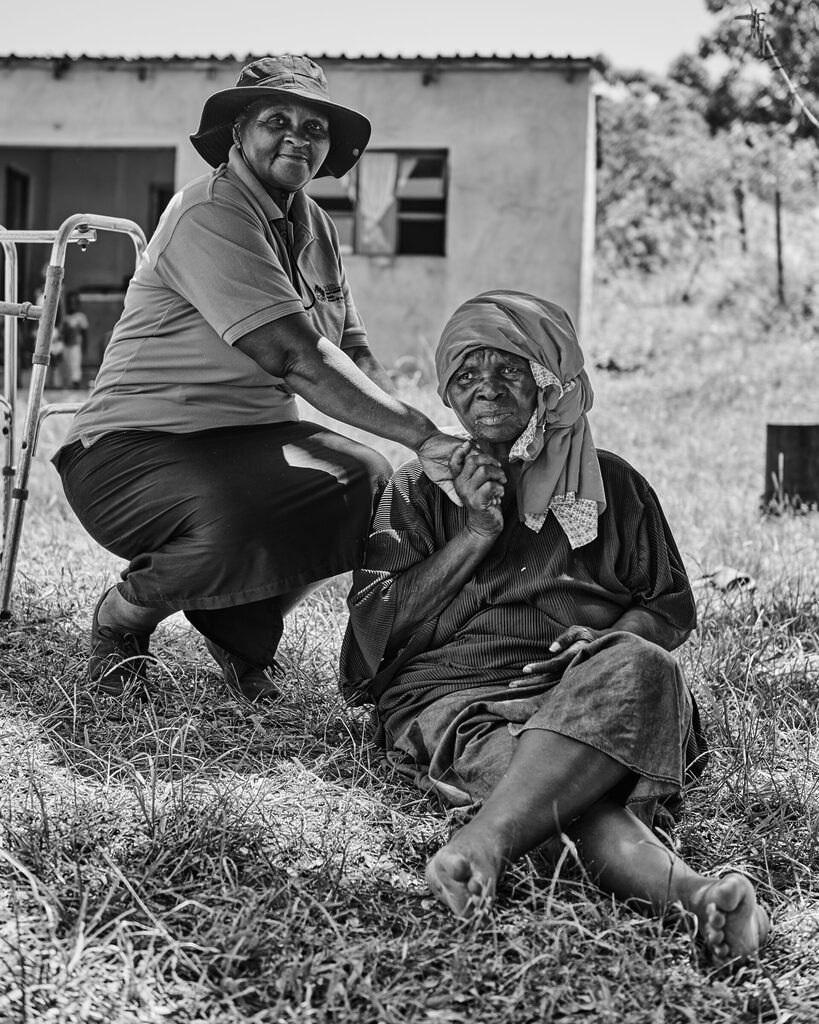
Next is a visit to an elderly woman living with her daughter and grandchildren in a small homestead. Nzuza checks that the woman is taking her hypertension medication and then helps her removes some laundry from the washing line. “Last time we were here, I gave her a foot massage,” she says. “She enjoys her foot massages.”
Mdletshe examines the woman’s walker. “We’re coming back next week with the physiotherapist, because she needs a wheelchair,” he says.
Back in the car, we drive along the dusty roads, over a few rivers, past a few taverns, a school or two, an abandoned building with a sign that says “hospice”, and a number of people on foot. We drive past a row of large blue water tanks, from which people can fetch water in buckets. Many people living in these parts do not have access to piped water.
Once a month, the clinic hosts a meeting with a range of key government departments, ward counsellors, police and traditional leaders, to work through important cases. “We consider this a very important meeting, and our community health workers are always there,” says Mdletshe, who coordinates the gatherings.
A community with numerous challenges
Although green, verdant and idyllic in appearance, this diverse community has many socio-economic challenges.
“Like many parts of South Africa, unemployment is our main challenge. Crime is a big issue. Teenage pregnancy and substance abuse are serious problems,” says Mdletshe.
We drive past a group of young men sitting under a tree. It’s a pastoral scene. Except, says Mdletshe: “They’re drinking.”
There is also a drug problem. “We have not escaped this whoonga thing,” he says. “It affects a lot of our youth. They break into houses and steal from their neighbours and their own families to buy drugs.” Whoonga is typically a dangerous mix of low-grade heroin and other additives.
A community man
Mdletshe was born in Ensingweni and attended rural schools in the area. He says he and his five siblings were raised by his single mother, Tholakele Margaret Mdletshe, after his father died when he was seven.
In 2005, Mdletshe was awarded a bursary to do a four-year general nursing course at the KwaZulu-Natal College of Nursing in Ngwelezana. After graduating, he worked in the surgical ward at Addington Hospital where he says he served as a professional nurse from 2010 to 2014. He then moved to Eshowe Hospital working in paediatric care until 2015, before joining Catherine Booth Hospital. In 2023, his journey brought him to Ensingweni Clinic.
Having been involved in church work from an early age, the 44-year-old became a pastor last year. “My faith is the starting point for whatever I do,” he says.
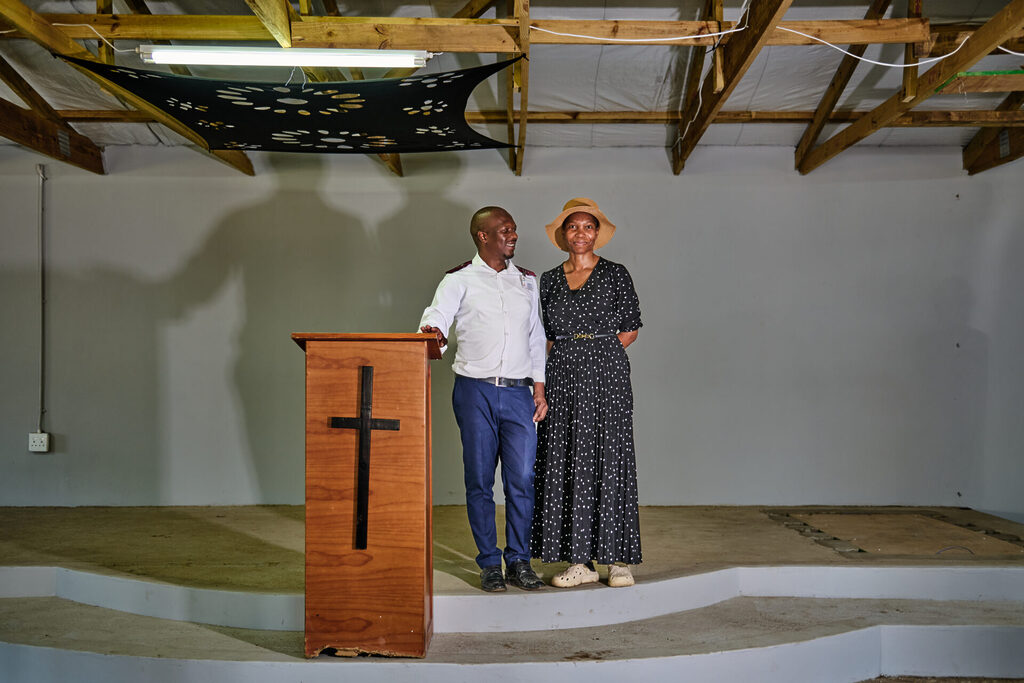
Beyond the clinic and the pulpit, Mdletshe also works with men and the youth.
He is the secretary of an NPO called Imbumba Yamadoda, a men’s forum that he says brings men together to confront and discuss challenges affecting them. “The main aim of the men’s forum is to bring back the dignity of men. We are trying to encourage them to turn away from rape, and from abusing alcohol and drugs.”
“A lot of the kids around here call me dad. Many of them lack a father’s love,” he says. “Wherever I go, the old people say, ‘that’s my child’, because they’ve known me since I was a boy. I feel that bond,” Mdletshe says.
“I’m not just serving a community. I’m serving my people,” he concludes, his face breaking into a smile.
Note: In Spotlight’s Rural Heroes series, we tell the stories of people working at the coalface of rural health. Besides platforming these remarkable individuals, the series also aims to increase understanding of the unique challenges of offering healthcare services in rural areas.
