
Donated mpox vaccine stock will be deployed as needed, says health dept as cases climb to 26
 Vaccination for mpox is recommended for people who are at high risk of acquiring the virus and at risk of getting severe disease. (Photo: Shutterstock)
Twenty of this year’s 26 confirmed mpox cases came after August, concentrated mostly within the Western Cape. Spotlight looks at how the virus has changed and how much of the donated vaccine is left.
The viral illness mpox has caused several clusters of outbreaks across the world. In South Africa, sporadic cases have been detected, but an uptick since August has now brought the illness back into the spotlight.
As of 27 October, 26 mpox cases have been confirmed in South Africa this year, Dr Jacqueline Weyer, Head of the Centre for Emerging Zoonotic and Parasitic Diseases at the National Institute for Communicable Diseases (NICD), told Spotlight.
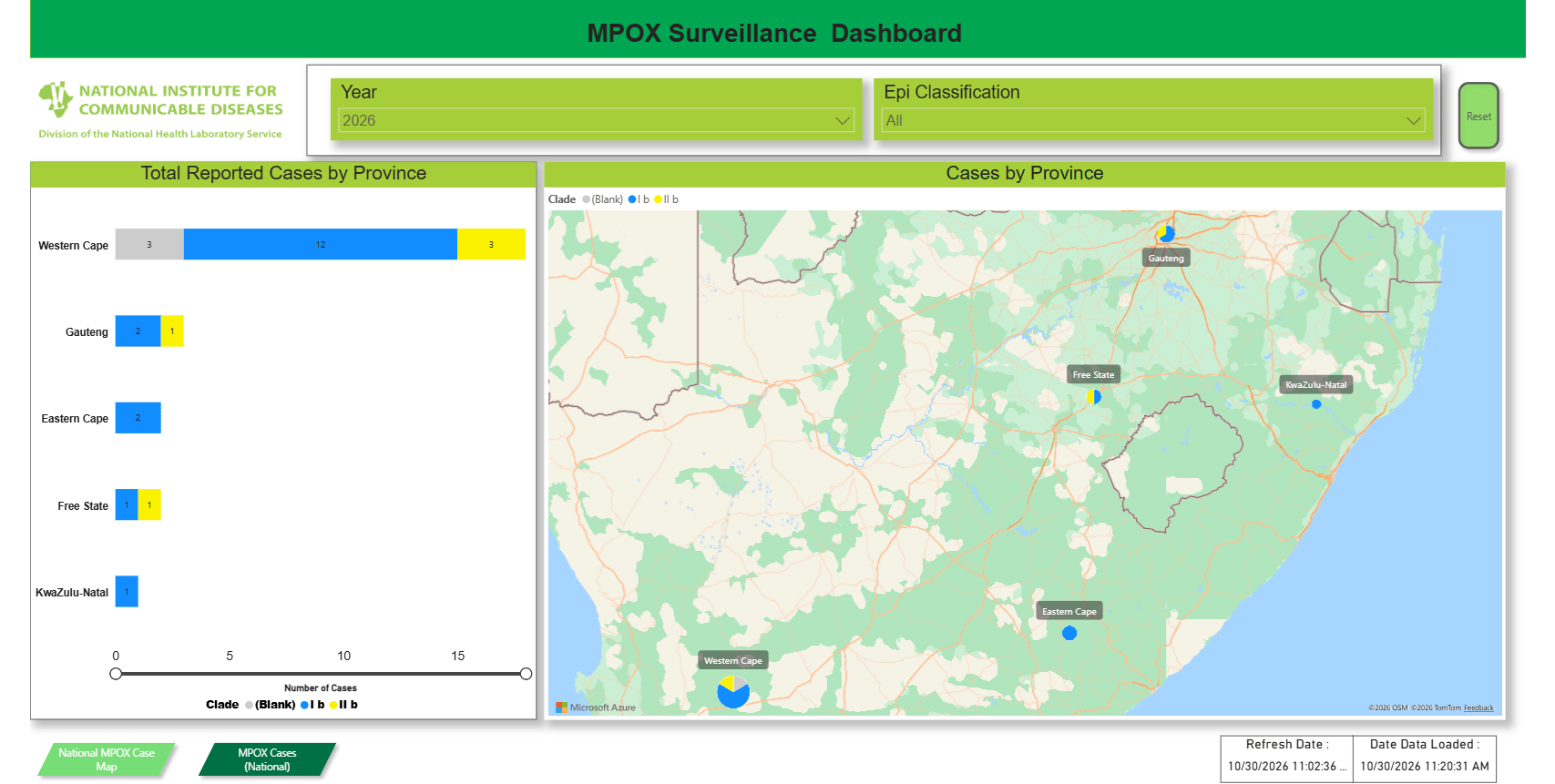
Of those 26 cases, 18 are in the Western Cape, three are in Gauteng, two are in the Eastern Cape, another two are in the Free State, and one is in KwaZulu-Natal. The majority of cases, 20, have been detected since August this year. All but one of these cases were in men between the ages of 23 and 50 years. One case was in a woman aged 35 to 44.
Seven people have been hospitalised, but no deaths have been reported so far this year.
SA has had a low number of cases overall
Mpox was first identified in humans in 1970, and was mostly observed in central, east and west Africa. The Democratic Republic of the Congo (DRC) was particularly affected, with thousands of cases reported since 2005.
Then in 2022, the virus spread rapidly to multiple countries for the first time. Around 140 countries have reported mpox cases since 2022, according to the World Health Organization’s mpox dashboard, with over 190 000 laboratory-confirmed cases reported and over 536 deaths to date.
The overall number of mpox cases in South Africa has been low. Our back-of-the-envelope calculation puts the total confirmed number of mpox cases since 2022 at 71. The NICD mpox dashboard lists a total of 66 cases and three deaths between 2024 and 2026. In 2023, according to Weyer, there were no reported cases of mpox in the country. There were five cases of mpox identified in 2022, according to information on the NICD’s page on mpox.
Small outbreaks
While the number of mpox cases have been relatively low to date, the current situation can be referred to as an outbreak.
Weyer told Spotlight an “outbreak” doesn’t necessarily mean a “large number” of people are affected. “Outbreaks may be large, small and confined, and for some conditions, a single case may be denoted as an outbreak.” In public health, she added, an outbreak “refers to the occurrence of cases of a disease in a particular place and period that warrants investigation and a public health response”.
When asked if there is a risk for a larger mpox outbreak in the country, Weyer is cautious.
“We cannot rule out the possibility of further cases, particularly while investigations are ongoing and local transmission has occurred previously,” she said.
“The risk of further spread depends on several factors, including how quickly cases are detected, the number and nature of contacts, the extent of transmission within affected networks, and the effectiveness of public health measures.”
Weyer added: “We have the opportunity to intervene early, identify additional cases and reduce the likelihood of further spread.” She said the NICD’s approach is to remain alert without creating unnecessary alarm. “We are continuing to strengthen surveillance, laboratory investigation, contact tracing, vaccination of eligible priority groups and public awareness,” she said.
The deal with vaccine doses
There is a limited number of donated mpox vaccines available in South Africa. Since there are currently no registered vaccines against mpox or other treatment options in the country, any vaccine or treatment used will need to be supplied via a Section 21 request, which allows for medicines that are not registered in South Africa to be brought in.
Vaccines against smallpox – which is caused by a virus closely related to the mpox virus – can offer some protection against the illness. There are three vaccines that can be used against mpox – LC16m8, MVA-BN and ACAM2000. The latter is only registered for limited use in the United States.
Last year, the Africa Centres for Disease control and Prevention (Africa CDC) donated just over 10 000 doses of the vaccine MVA-BN (known by the brand names imvanex and JYNNEOS) to the National Department of Health. These doses were used in vaccination efforts ever since, with a total of 2 365 doses administered between September 2025 and September 2026, health department spokesperson Foster Mohale told Spotlight.
There are currently 3 865 doses still available for use, according to Mohale, which will expire on 31 August 2027. We asked the health department about the remaining 4 000 or so doses but are still awaiting reply.
When asked whether any additional mpox vaccines will be procured or donated, Mohale said: “Yes, the department is currently reviewing procurement options of additional mpox vaccine doses, dependant on the recommendation from [the] Incident Management Team and the National Advisory Group on Immunisation.”
Mohale said vaccine doses are distributed to provinces as required, depending on “disease outbreak and response”.
Related Posts
Vaccination for mpox is recommended for people who are at high risk of acquiring the virus and at risk of getting severe disease. It can also be considered as a form of post-exposure prophylaxis for people who have been in contact with someone who has mpox.
An antiviral medicine called tecovirimat is occasionally used to treat mpox symptoms in severe cases. There is some limited stock of the drug available for use in South Africa, which Mohale said was sourced through the World Health Organization (WHO) and Africa CDC’s Access and Allocation Mechanism.
There are still more than 40 containers of tecovirimat capsules available, Mohale said. But there are not currently any plans to procure more, although he added that this will be dependent on the recommendation from the Incident Management Team and the National Essential Medicines List Committee. He did not say how many treatment courses are in a container.
In a 2025 National Department of Health mpox guideline document, the National Essential Medicines List Committee suggests that tecovirimat should only be used to treat those with severe disease who have been hospitalised.
This is because the drug has not been shown to make any significant difference in most cases of mpox. Earlier this year, results from a phase 3 study published in the New England Journal of Medicine showed that there was “no evidence that tecovirimat therapy shortened the time to clinical resolution, reduced pain, or increased viral clearance among adults with clade II mpox.”
How the outbreaks have changed since 2022
At first, mpox cases in the country were traced back to international travel. Then in 2024 and 2025 we started seeing local transmission.
Most people diagnosed with mpox in 2024 reported no recent international travel history, Weyer said, noting that “the epidemiological assessment indicated that local person-to-person transmission was occurring”.
For the current situation, Weyer said local transmission is “implied”, noting that investigations are still ongoing.
“This has been established by identifying contact links between cases, and identifying the same clade and sub-lineage of the mpox virus associated with the cases to date.”
There were some individuals who were diagnosed with mpox this year who had recently been out of the country. One of the people had recently travelled to Spain, while another had travelled to Belgium. In two other cases international travellers came to South Africa already carrying the virus.
The clades at play
The mpox virus has two clades, clade I and clade II, with several sub-clades. Professor Tulio de Oliveira, Director of the Centre for Epidemic Response and Innovation at Stellenbosch University, explained to Spotlight previously that clades are a classification system based on the genetic similarities between different strains of a virus.
“So, what it means is that when we see a genetic change [in a virus] that’s really visible and that may have impacted it, normally we call it a different clade or genotype or variant,” he said at the time.
For now, the two mpox sub-clades that are driving most cases in people are sub-clade Ib and sub-clade IIb. This year, cases of mpox in South Africa are a mix of the two sub-clades. The mpox dashboard shows that of the 26 cases, 19 were sub-clade Ib, four were sub-clade IIb, and three cases didn’t have sub-clade information available.
In 2022, sub-clade IIb was driving the mpox outbreak, said Weyer. This changed by 2024 when a new strain of the mpox virus spread beyond the DRC. Sub-clade Ib was first identified in the DRC in 2023 and was behind a large outbreak of the illness in the country that year. This sub-clade spread from the DRC through international travel and cases of sub-clade Ib were reported across the globe by 2024.
The first case of mpox where sequencing indicated sub-clade Ib in South Africa was detected in 2025, according to the NICD dashboard. There was a total of 15 mpox cases reported that year, and sequencing information was available in all but one of the cases.
Weyer said that at the moment there is not any evidence to indicate that there are additional mpox clades or sub-clades circulating in the country.
How mpox is diagnosed and managed
Knowing which clade or sub-clade someone with mpox has doesn’t change how their illness is managed. Instead, it helps scientists track outbreaks.
“Understanding the genetic character of the viruses assists us in tracking outbreaks, evolution of the viruses and identifying markers which may affect diagnostic test performance and potentially vaccine efficacy,” Weyer said.
“The central priorities remain early diagnosis, appropriate clinical care, identifying and monitoring contacts, vaccination of eligible target groups, and communicating accurate information without stigmatising affected individuals or communities. The approach is the same regardless of the current genetic character of these viruses,” she added.
Mpox is mainly spread through close contact with someone who has the virus or contact with material like bedding or clothing that has been in contact with someone with mpox.
The illness can cause flu-like symptoms – like a headache, sore throat, fever and muscle aches – as well as a distinct and often painful rash. The rash can occur on someone’s palms or soles of their feet, face, mouth and throat and sometimes the genital areas. It starts as a flat sore, then becomes a blister which can be itchy or painful. As the rash heals, the lesions dry up, crust over and fall off.
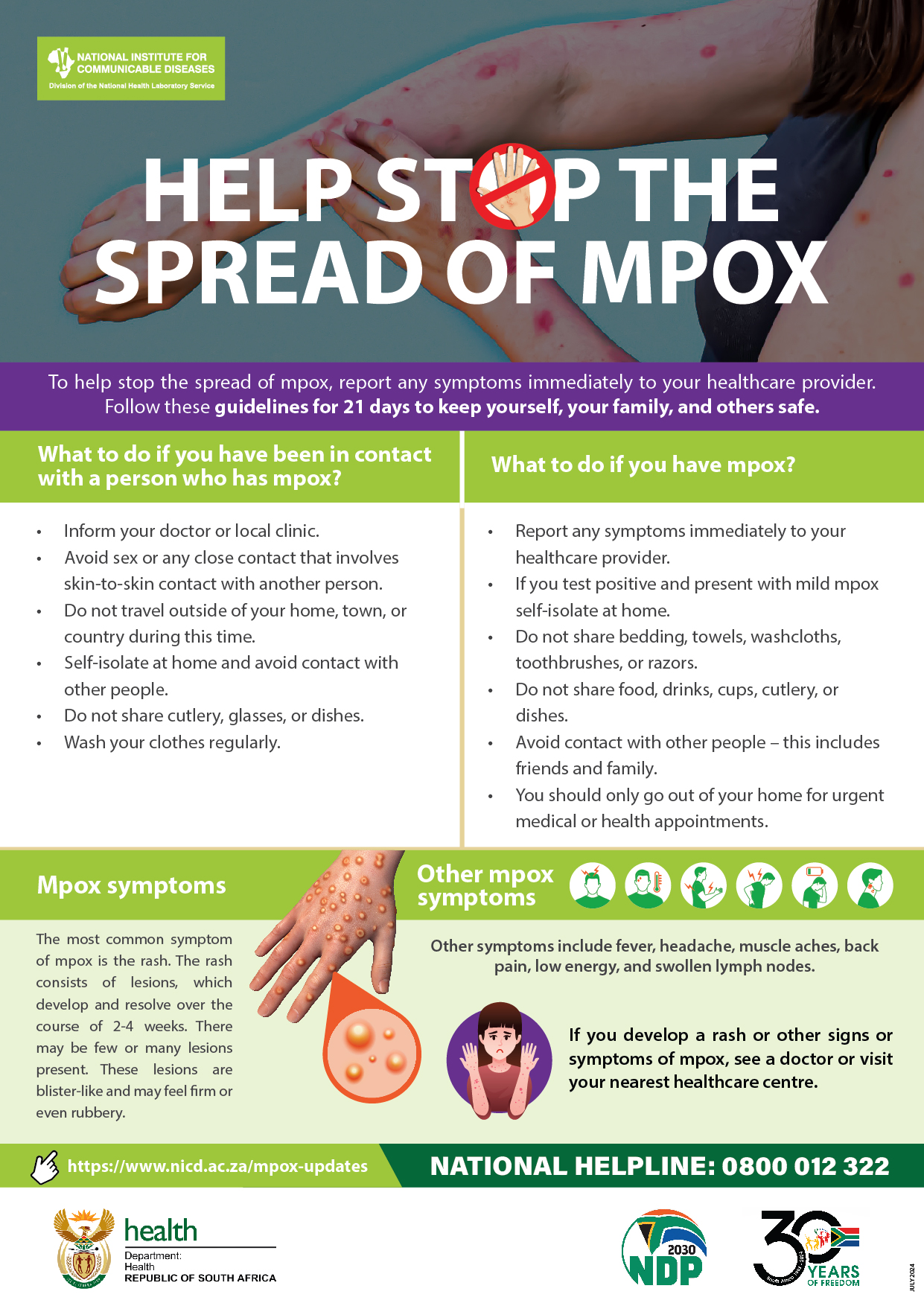
The virus has an incubation period of anything from five to 21 days – but usually it is around seven to 14 days.
“Mpox can affect anyone who has close contact with an infected person. We should avoid assumptions about who can acquire the infection and ensure that people feel able to seek healthcare without fear of judgement or discrimination,” said Weyer.
Mpox is normally diagnosed by swabbing the lesions from the rash and sending that for testing with a PCR (polymerase chain reaction) test that looks for the virus’s DNA.
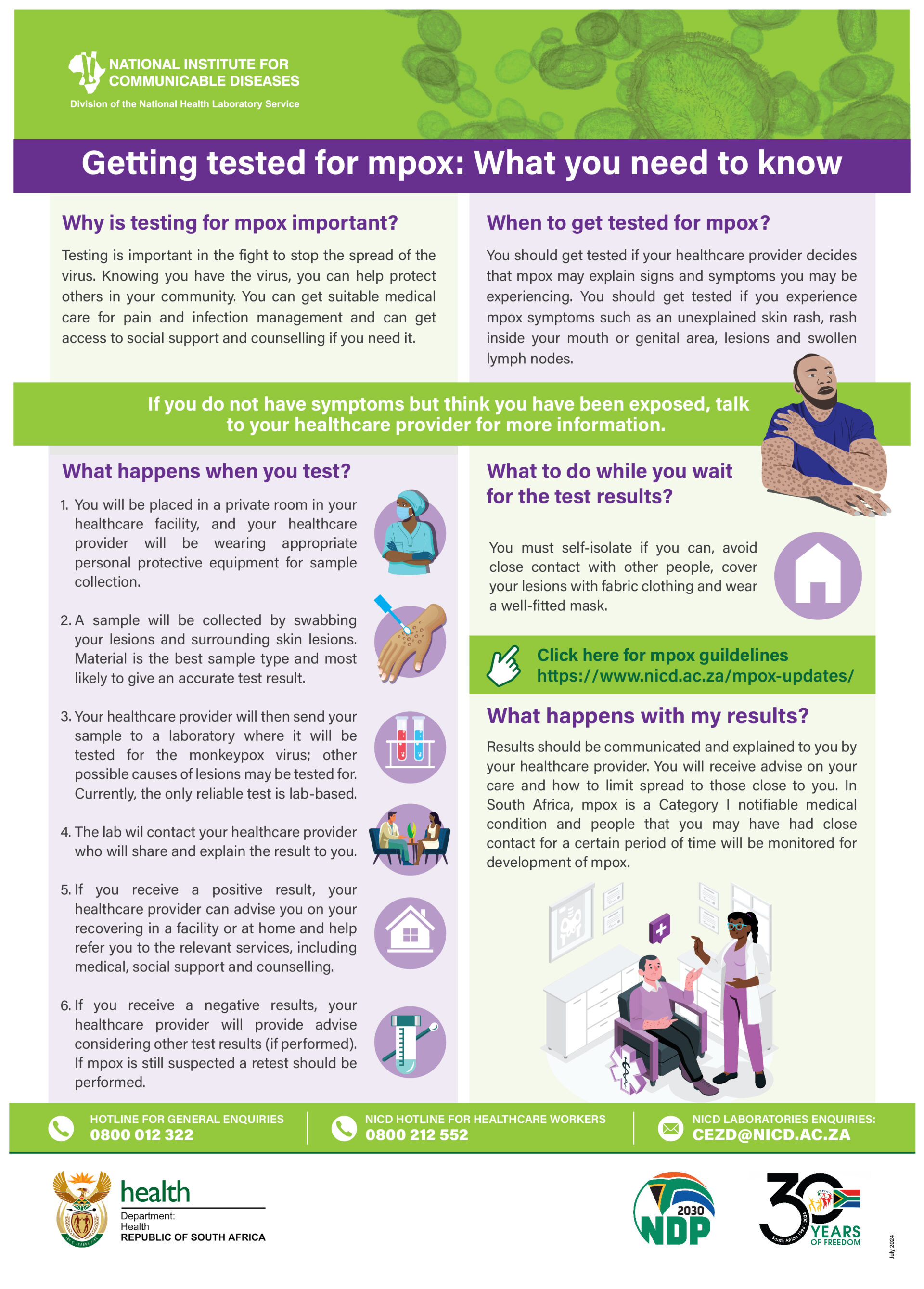
While the overall case fatality for mpox is low, typically below 1%, people who are immunocompromised (such as people living with uncontrolled HIV), pregnant women, and children, have a much higher risk of severe illness, complications and even death.
In most cases, according to the mpox guideline document, symptoms can be managed at home, with rash-related pain being a particular challenge. Severe mpox cases require hospitalisation.
Someone who has mpox is considered contagious until the rash has completely gone away, and the scabs have healed. Thus, people diagnosed with mpox are advised to self-isolate until their rash has gone away completely.
“People who develop an unexplained rash, particularly when accompanied by fever, swollen lymph nodes or a history of possible exposure, should seek medical assessment,” Weyer advised. “They should avoid close physical contact with others while awaiting clinical guidance and testing. The public should understand that mpox is preventable and that early diagnosis and appropriate care are important in reducing transmission and complications.”