
Where children die | Kids with terminal illnesses mostly still dependent on NGOs
 Some illnesses requiring palliative care are not imminently life-threatening and many children receiving palliative care services live for years. (Photo: Unsplash)
Though the available statistics are patchy, there is little doubt that too many children with life-threatening or life-limiting illnesses in South Africa are unable to access palliative care. With limited state investment, NGOs have stepped in, but the need for care still far exceeds what is available. In part 3 of a Spotlight special series on palliative care for kids, we zoom out to look at the national picture.
On Monday and Wednesday mornings, Dr Julia Ambler can be found in the outpatient clinic at Durban’s Inkosi Albert Luthuli Central Hospital. Here, she and her colleagues constantly face hard, often heartbreaking decisions about children with life-threatening conditions.
Ambler, a paediatric palliative care specialist, is literally one of a kind. She says she is the only state-paid doctor nationwide doing dedicated work with children who need palliative care. What’s more, government only pays her to do this for ten hours a week. We asked the National Department of Health whether there really is only one specialist in the country paid by the state to do this work, but we did not receive a response.
On a given day, Ambler says she might be consulting with the mother of a newborn baby from the hospital’s intensive care unit with a heart problem that can’t be surgically corrected. She might have an appointment with the mom of a ten-year-old child with cancer, who’s not responding to treatment. Or be meeting the grandmother of a child with a neurological disorder like cerebral palsy.
In the case of the ICU baby, she might have to break the news to the mother that her baby won’t survive. It’s then a case of working with the mom on how to manage her baby until the end of her life.
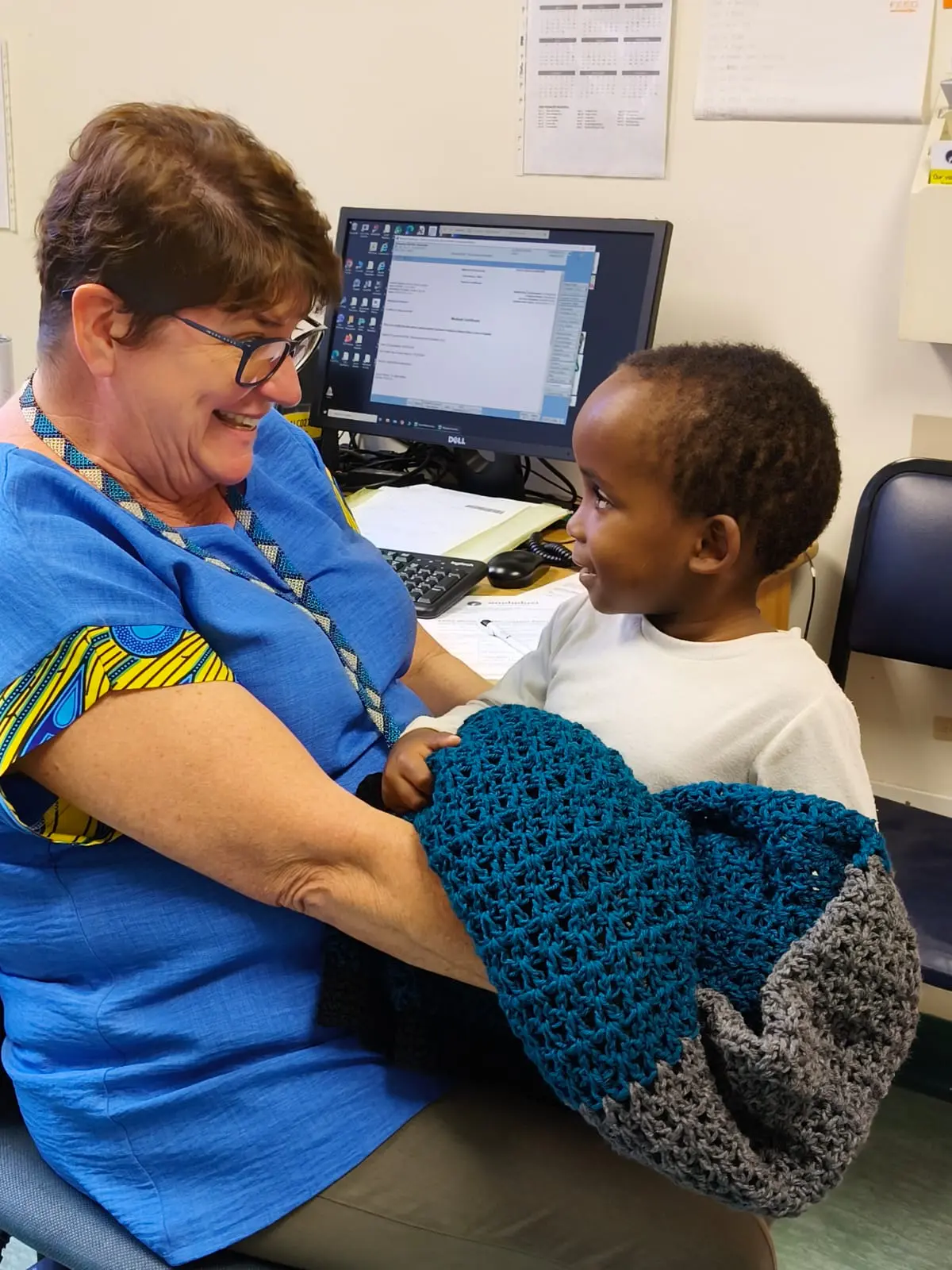
“For the cancer patient, it’s a matter of explaining to both the mother and the child that it’s time to stop the treatment as the chemotherapy or radiotherapy is no longer working. We discuss what the child might experience from now and prepare the family to deal with developing symptoms; and share how we can support them to improve the child’s quality of life, regardless of what happens,” she says.
For the child with the neurological disorder, besides dealing with the child’s physical needs, Ambler and her team might also look at psychosocial issues, like the mother’s distress.
In between such consultations, Ambler might get a call from ICU about a child with complicated healthcare needs to discuss whether or not they should withdraw the child from the ventilator that is keeping her alive.
“I’m often called into multi-disciplinary meetings to give ethical input on big decisions like this. We look at all the facts around the case, because sometimes the doctors doing the primary care may be very connected to the child or over optimistic, and we might need different decisions,” says Ambler. “If we decide it’s time we withdraw the ventilator and allow the child to die, a member of my team will go and counsel the family.”
The tip of the iceberg
In the course of a day, Ambler says she might see up to ten patients, and their parents; and she sees dozens of such patients every month.
Because she has only 10 hours working for the state, Umduduzi, an NGO she co-founded in 2013, has to help fill the many remaining gaps. The NGO has a team of nurses and a social worker. They visit patients in hospital wards and conduct preliminary assessments on new patients and check on existing patients who have been admitted to hospitals in the eThekwini health district.
“They are basically keeping up with what’s happening; finding out if things are getting better or worse for patients, whether the child’s pain is being controlled, and if mom needs more spiritual support,” says Ambler.
“If it wasn’t for Umduduzi and the work we do as a team, this task would be impossible. The need is overwhelming and the capacity is limited,” she says.
Though Ambler is speaking about KwaZulu-Natal, the same could be said for South Africa as a whole.
Limited data
There is little reliable data on the shortage of palliative care for children in South Africa, but what we do know points to a substantial problem. Research conducted by UNICEF and the International Children’s Palliative Care Network (ICPCN) in 2013 estimated that around 300 000 children in South Africa needed specialised palliative care, with only around 5% receiving it.
One of the main drivers of this need was HIV – since the situation with HIV has improved a lot in the 13 years since then, the current need might well be lower. Annual AIDS deaths in children (up to age 15) has declined from around 8 000 in 2013 to 1 500 in 2025, according to estimates from the Thembisa mathematical model.
On the other hand, Joan Marston, a former Chief Executive of the International Children’s Palliative Care Network, reckons that the real figures are actually higher than estimated in 2013, because, among others, that study did not include numbers on cerebral palsy and rare diseases. Marston was involved with the 2013 research.
Of course, such estimates of need partly depend on how palliative care is defined – the wider the definition the higher the number.
According to the NGO Palliative Care for Children South Africa (PatchSA), palliative care involves different levels:
- A palliative care approach for children who have a life-threating diagnosis but are being well managed,
- Generalised palliative care for more serious illnesses such as cerebral palsy, cystic fibrosis, or some cancers, and
- Specialised palliative care for children with late-stage cancer, heart conditions, or kidney disease.
Whichever way one defines it though, that there is an unmet need is clear, though the exact extent might not be.
“Research is a necessity … we can’t budget to reach these children unless we have the numbers,” Marston says. But, as she also points out, the lack of research is itself due to a lack of funding.
Palliative care is not “giving up”
Ideally, palliative care should be holistic, involving a team of doctors, nurses, social workers and other therapists working together. Some illnesses requiring palliative care are not imminently life-threatening and many children receiving palliative care services live for years.
Sue Boucher, programme manager at PatchSA, says healthcare providers are overwhelmed and often do not have the time to offer the child and family holistic palliative care.
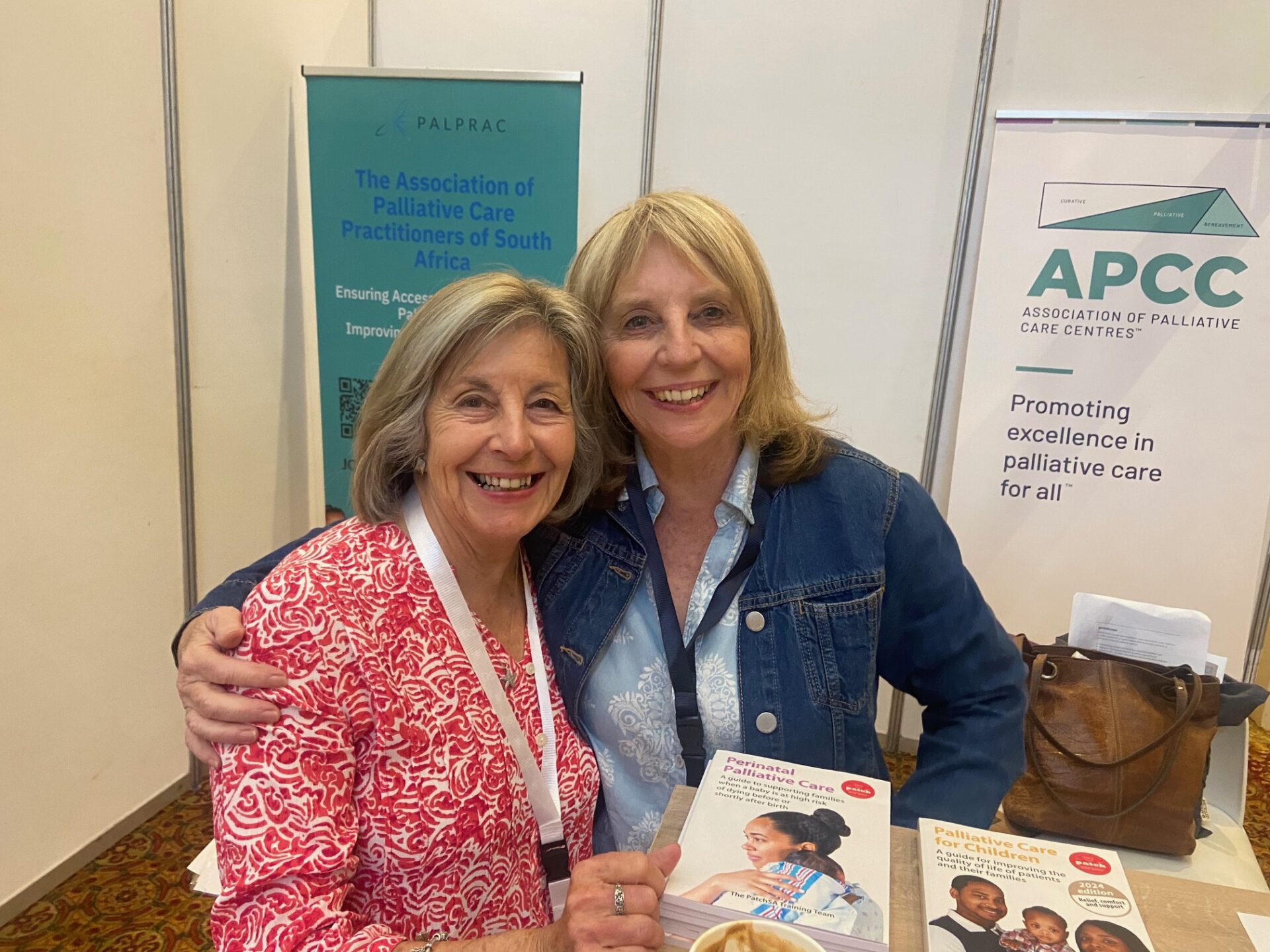
“It’s a very uneven playing field,” she says, “as with so many situations in South Africa. Even in the best of circumstances, the misconception persists that palliative care is equal to ‘end-of-life care’ and means that they are ‘giving up’ on working towards a cure, prevents many doctors and specialists from referring their patients to the existing facilities and organisations who can provide paediatric palliative care. Many families also believe that palliative care is ‘giving up’ so they may also resist it.”
NGOs can’t cope with the need
There are currently only five dedicated inpatient children’s hospices in South Africa. These are the Butterfly Palliative Home which has two hospices, one in Ingwavuma and the other in Empangeni, in KwaZulu-Natal; the Stepping Stone hospice and Lambano Sanctuary in Johannesburg; and the Sunflower Children’s hospice in Bloemfontein.
RURAL HEALTH HEROES | When Thokozile Ndlovu found out her baby had a life-limiting illness, she went from pillar to post looking for medical help. Her journey took her to one of the only places offering hope, the Butterfly Palliative Home in KwaZulu-Natal. www.spotlightnsp.co.za/2026/04/28/w…
— Spotlight (@spotlightnsp.bsky.social) April 28, 2026 at 8:55 AM
Some palliative care services, like Umduduzi Hospice Care for Children, and the Hamba Nawe project in Tshwane while not offering inpatient services themselves, provide hospital-based and home-based care; with nurses and other team members going out to visit patients in hospitals and at home with their families.
Paedspal, in Cape Town, while not offering inpatient care, provides hospital and home-based care and runs a specialised palliative care clinic where parents can bring their children for consultations.
“These NGOs are doing amazing work, but it’s a drop in the ocean, compared with the need,” says Boucher.
An expired policy
A palliative care policy was published by the National Department of Health in 2017 – it expired in 2023. A key pillar of the policy was the intention to integrate palliative care services into the public healthcare system and thus to reduce the pressure on NGOs. The idea was that each province would develop a plan to implement the policy. A study conducted in Cape Town found that at least some palliative care-related indicators improved after the adoption of the policy, although substantial challenges remain.
Several people interviewed by Spotlight however say that the 2017 policy was never properly implemented.
Spotlight also understands that there are currently no national guidelines in place for palliative care, though Boucher says guidelines have been developed and are being written up. She also says palliative care associations “are collaborating with the Department of Health on the development of an updated policy which will include a separate section dedicated to paediatric palliative care”.
Some related guideline documents include a 2019 guideline on palliative care for people living with HIV and an ethical guideline from the Health Professions Council of South Africa.
In the expired national policy document, the health minister noted that palliative care as a health service module has not been determined and therefore adequate funding has not been allocated for the delivery of care. “The cost of palliative care services has not been determined both for district health services and primary health care within district health services and at hospital level. Currently there is no costing model in place,” the document reads.
The document also acknowledges that while service providers get some funding from government, it is not nearly enough. “Many of these organizations are largely reliant on donor-funding, making them particularly vulnerable to changes in donor patterns,” it stated.
Marston, who helped set up the Sunflower Children’s Hospice, says the serious lack of palliative care and “the fact that we sit with only five dedicated programmes for children” is largely due to the government’s failure to commit funding.
“Our government signed the World Health Assembly resolution (WHA67.19) in 2014, where WHO member countries agreed that palliative care is an essential service which should be integrated into comprehensive healthcare systems. South Africa was one of the proposers of the resolution and yet the government has not put funding into paediatric palliative care. They’ve left it to the NGO sector,” she says.
Training more people to provide palliative care
Several of the people Spotlight interviewed for this series agree that palliative care training for healthcare workers is critical and one of the most important solutions to addressing the care crisis.
“What we see as our most significant contribution to filling the gap is our extensive education programme that provides accessible and affordable distance learning through our online learning platform, Patch Academy,” says Boucher. “This platform offers 14 asynchronous (standalone) CPD accredited courses on key elements of paediatric palliative care as well as two tutor-led comprehensive courses, being a 9-month course on paediatric palliative care and a 4-month course on perinatal palliative care.”
She says medical students from five universities are now required to do their free introductory course and the University of Cape Town offers a post-graduate diploma in paediatric palliative medicine.
With these efforts, says Boucher, the shortage of people trained in paediatric palliative care is slowly being addressed.
Related Posts
Change is also on the horizon in KwaZulu-Natal. For the past five years, Ambler and Umduduzi have been working with the provincial department of health to develop a provincial plan aimed at integrating paediatric palliative care into health services, for instance by encouraging people in the hospital and community health sector to do the online training offered by PatchSA.
“The model is to try and get people already working as doctors, nurses, physios etc to understand the concepts of paediatric palliative care because we won’t have specialised palliative care for a very long time,” says Ambler.
“The department of Health in KZN is also playing the game … and we had our first training session last year [2025] for more than 50 health professionals from northern KZN. The next session will be in the Pietermaritzburg area, followed by Durban and the south coast.”
The National Department of Health did not respond to Spotlight’s request for comment.
*The abbreviated definition of palliative care, according to PatchSA, is “the active, holistic care (by a team of qualified people) of people experiencing serious health-related suffering due to severe illness, particularly those nearing the end of life. It aims to improve quality of life for patients, families, and caregivers through the prevention and relief of suffering, including early identification, comprehensive assessment, and evidence-based management of physical symptoms, as well as psychological, social, and spiritual distress.”
