featured

featured

Interactive Data Dashboards

Track the HIV & TB response

Key indicators, province breakdowns and downloadable graphs.

  • Life Esidimeni Inquest: Journal of a grieving sister

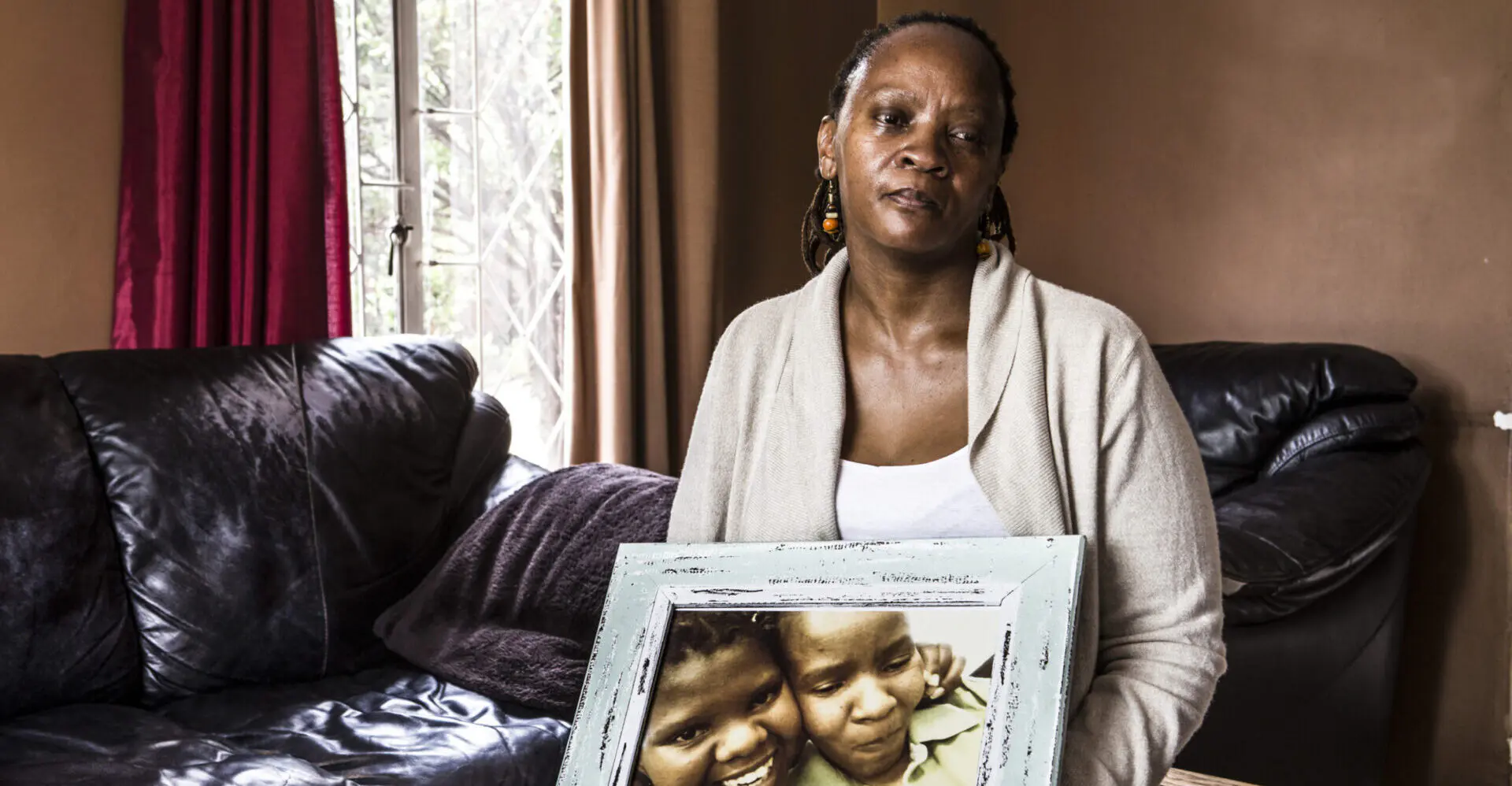
    The Life Esidimeni Inquest that started in July has been postponed until 15 November. This is the fifth postponement, meaning another agonising wait for family members of the deceased. The Inquest is crucial to determine who should be held criminally liable for the deaths of 144 mental healthcare users in 2016. Here one family member,…

    ·

  • Quality Tuberculosis care starts with people

    The world is seeing tuberculosis (TB) deaths increase for the first time in over a decade. To turn things around and to put an end to TB being a leading infectious disease killer globally, we need to make sure the voices of people affected by TB are at the core of developing person-centered, quality TB…

    ·

  • What public sector mental health services look like in the Free State

    A 36-year-old mother living with HIV from Thabong in Welkom in the Free State is among the many millions of people in South Africa who rely on public healthcare services. Also, like many others, the COVID-19 pandemic and its associated disruptions have left her in a constant struggle with anxiety. Refilwe Mochoari asks what mental…

    ·

  • Does SA have a diabetes testing problem?

    Though the numbers are relatively uncertain, it is estimated that between four and five million people in South Africa are living with diabetes. One reason for the uncertainty is a lack of testing. A lack of testing also means that many people get diagnosed too late in the course of the disease. Elri Voigt asks…

    ·

  • Landmark moment as AI beats humans in reading X-rays for TB

    “The results are in: artificial intelligence (AI) outperforms humans at reading chest X-rays for signs of tuberculosis,” proclaimed a recent newsletter of the Stop TB Partnership. Tiyese Jeranji spoke to a variety of experts about the landmark study behind this proclamation and asked what AI-aided X-ray interpretation may mean for countries like South Africa with…

    ·

  • On the COVID-19 frontlines: We are all traumatised, says Prof Jackie Hoare

    Working with Groote Schuur Hospital’s frontline COVID team, Psychiatry Professor Jackie Hoare help manage the mental health of patients admitted with severe COVID pneumonia and also the mental health needs of fellow healthcare workers. Bienne Huisman caught up with her to talk about providing counselling at the bedside of COVID patients and how we deal…

    ·

  • COVID-19: What tests are available in SA and which ones to use?

    The different types of COVID-19 tests are far from equal. Picking a test is generally a matter of speed versus accuracy and, most importantly, why you need a test and when. What are the limitations of these tests? Is there any quality control? What are the chances of false positives and false negatives? Elsabé Brits…

    ·

  • SA’s mental health policy has lapsed, what happens next?

    Once widely hailed, South Africa’s Mental Health Policy Framework and Strategic Plan 2013 – 2020 lapsed last year, with mixed reviews on its implementation from mental healthcare stakeholders. The National Department of Health now says the revised and updated Policy Framework and Plan will be in place in the next financial year. Tiyese Jeranji spoke…

    ·

  • Climate emergency risks becoming a mental health emergency

    Studies have shown that the rate of mental health problems, such as suicidality, anxiety, depression, and post-traumatic stress, increase after natural disasters. Mbalenhle Baduza unpacks the findings of a recent report by the Centre for Environmental Rights on the psychological and mental health consequences of climate change in South Africa.

    ·

  • Ageing nurses: A crisis on the horizon

    Nurses make up a large part of the healthcare workforce in South Africa, but almost half of them are set to retire in the next 15 years. This suggests existing shortages of nurses will become even greater unless we take concrete steps to boost nurse training and retention. Elna Schütz reports.

    ·