
Mireille Wenger | What 49 000 Western Cape teenagers taught us about preventing alcohol abuse and violence
 Mireille Wenger is the Provincial Minister of Health and Wellness in the Western Cape Government. (Photo: Supplied)
A survey of 49 000 teenagers in the Western Cape reminds us that preventing violence does not begin in a hospital, a police station or a courtroom. It begins much earlier, in families, schools, sports fields, faith communities and neighbourhoods, writes Western Cape Provincial Minister of Health and Wellness Mireille Wenger.
Every weekend, healthcare workers across the Western Cape deal with the consequences of violence, alcohol-related injuries and trauma.
Ambulances respond to stabbings and shootings as emergency centres swell with victims of assaults, road traffic accidents and gender-based violence. Surgeons, nurses and rehabilitation teams work tirelessly to save lives and help patients recover.
While healthcare workers are often left to manage the consequences of violence, the causes of that violence lie far beyond hospital walls.
Therefore, if we are serious about reducing violence and improving health outcomes, we need to shift more of our attention upstream. Simply, it means we must focus not only on responding to harm after it has occurred, but on preventing it in the first place.
That is why the Western Cape Government has embraced an initiative called Planet Youth. It is based on an internationally recognised, evidence-based Icelandic prevention model focused on listening to young people, building social protective factors in communities, and changing the environments around them, in their homes, their schools, and their neighbourhoods.
OP-ED | Substance abuse is both a symptom and a consequence of untreated mental illness, and government needs to urgently step in to confront this dangerous overlap, argues Gauta Mashego of SECTION27.
www.spotlightnsp.co.za/2026/04/30/i…— Spotlight (@spotlightnsp.bsky.social) April 30, 2026 at 10:03 AM
More than just a survey of teenagers, Planet Youth seeks to understand the social conditions shaping the lives of young people and the protective factors that help them thrive. Rather than waiting for adolescents to become patients, victims or perpetrators, the programme asks what communities can do to create environments that support healthier choices and better outcomes.
At its core, Planet Youth is built on the simple premise that if we want different outcomes for young people, we need to understand the factors driving those outcomes and work together to change them.
Survey of 49 000
Making it one of the largest implementations of the Icelandic programme globally, more than 49 000 Grade 8 and Grade 9 learners (mostly between 13 – 15 year olds) across 123 schools in the Western Cape participated in the Planet Youth survey run by the provincial Department of Health and Wellness. This survey provides a meaningful snapshot of the lives, experiences and behaviours of young people across communities that together represent approximately 1.8 million residents.
The findings offer both cause for concern and reason for hope.
One of the clearest messages emerging from the data is the role that alcohol continues to play in the lives of many young people.
Almost one in four learners reported trying alcohol by the age of 13, and more than a quarter reported having been drunk at some point in their lives.
What is particularly striking is where this exposure is taking place. 35% of learners reported drinking alcohol at home, while 34% said they obtained alcohol from family members. More than half reported drinking in other people’s homes.
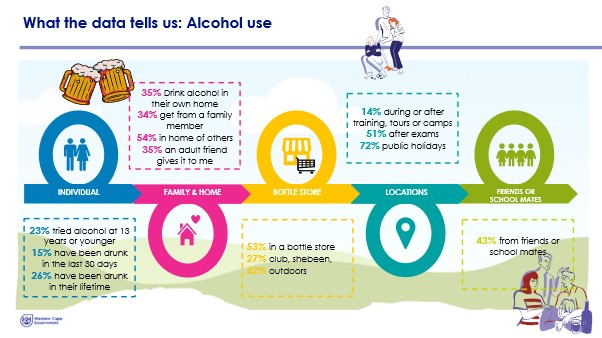
These findings challenge the notion that underage drinking happens beyond the reach of parents, caregivers and communities. Instead, the data suggests that many of the environments shaping young people’s attitudes towards alcohol are places where adults have the greatest influence.
The survey also revealed clear patterns showing when young people are most likely to consume alcohol. More than half of learners who drink reported doing so after examinations, while nearly three-quarters reported drinking on public holidays.
These are not random moments. They are predictable periods of increased risk, which means they also present opportunities for prevention.
Why does this matter?
Alcohol is not simply associated with poor decision-making, it is closely linked to violence and injury.
South Africa continues to face one of the highest burdens of alcohol-related harm in the world. Alcohol contributes significantly to violent crime, gender-based violence, road traffic injuries and trauma admissions. It is estimated to contribute to tens of thousands of deaths nationally every year.
We saw the relationship between alcohol and violence particularly clearly during the COVID-19 pandemic.
During periods when alcohol sales were restricted, researchers recorded a 47.7% reduction in injury-related deaths during April and May 2020 compared with the same period in 2019, with an overall average decrease of 15.7% in 2020 compared with 2019. In the Western Cape, femicide rates declined by 63% during periods of complete alcohol bans. When restrictions were lifted and alcohol became available again, admissions for violent assaults and firearm injuries increased by 107%.
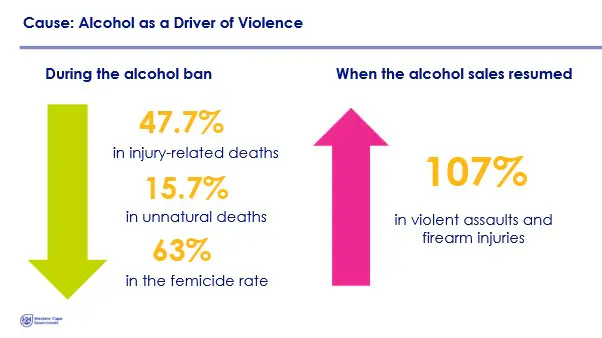
Yet perhaps the most important lesson from Planet Youth was not about alcohol itself. It was about parents.
Among all the risk and protective factors measured, the role of parents and caregivers stood out as one of the strongest influences on adolescent behaviour.
The survey found that teenagers whose parents clearly disapproved of alcohol use were significantly less likely to report getting drunk. By contrast, adolescents whose parents did not communicate clear disapproval were approximately three times more likely to report having been drunk in the previous month.
And the protective role of parents extends beyond alcohol use.
From the surveyed learners, adolescents who reported being drunk during the previous 30 days were more than twice as likely to report assaulting someone compared with those who had not consumed alcohol.
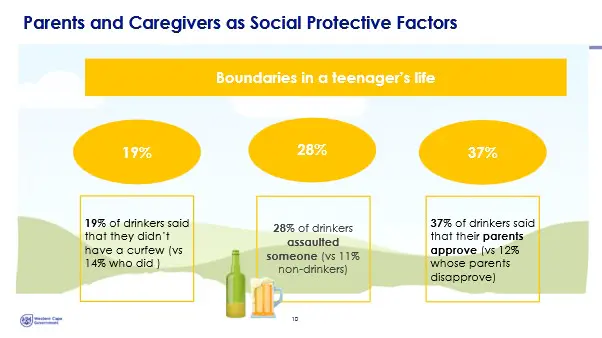
The pattern is consistent and compelling – strong family relationships, clear expectations, parental monitoring and firm boundaries all reduce the likelihood of substance use among adolescents. Where boundaries become unclear or permissive, risk increases.
For many people, this may not sound revolutionary. Parents have long understood the importance of boundaries, supervision and communication.
What Planet Youth does is provide evidence that these everyday actions matter. It quantifies their impact and demonstrates that they remain among the most powerful tools available to protect young people from harm.
Related Posts
Importantly, this does not mean that responsibility rests solely with families. Parents and caregivers need support. Communities need safe spaces and positive opportunities for young people. Sports clubs, faith-based organisations, civil society organisations and government all have important roles to play.
This is one of the reasons Planet Youth is so valuable. It moves the conversation beyond individual responsibility and towards collective responsibility. Planet Youth help communities identify the factors placing young people at risk and, equally importantly, the factors protecting them. It then enables local action based on evidence rather than assumptions.
That is why the Western Cape Government is working with parenting experts to launch the Masithethe “Let’s Talk” Positive Parenting Series. This vodcast is aimed at strengthening families through positive parenting which has been identified as a key protective factor for young people. It offers practical guidance and genuine support in a relatable manner.

As a health system, we will always be committed to providing high quality care to those who need it. But we cannot treat our way out of violence, the long-term answer lies in prevention.
If we are serious about building a safer and healthier society, we must invest as much energy in prevention as we do in treatment.
The voices of 49 000 teenagers have reminded us that prevention is a team effort. By working together to strengthen the protective factors around young people, we can build safer, healthier communities for generations to come.
*Wenger is Minister of Health and Wellness for the Western Cape.
Note: Spotlight aims to deepen public understanding of important health issues by publishing a variety of views on its opinion pages. The views expressed in this article are not necessarily shared by the Spotlight editors.
