
Health policy trailblazer Precious Matsoso credits patience, keeping her cool, and The Beatles
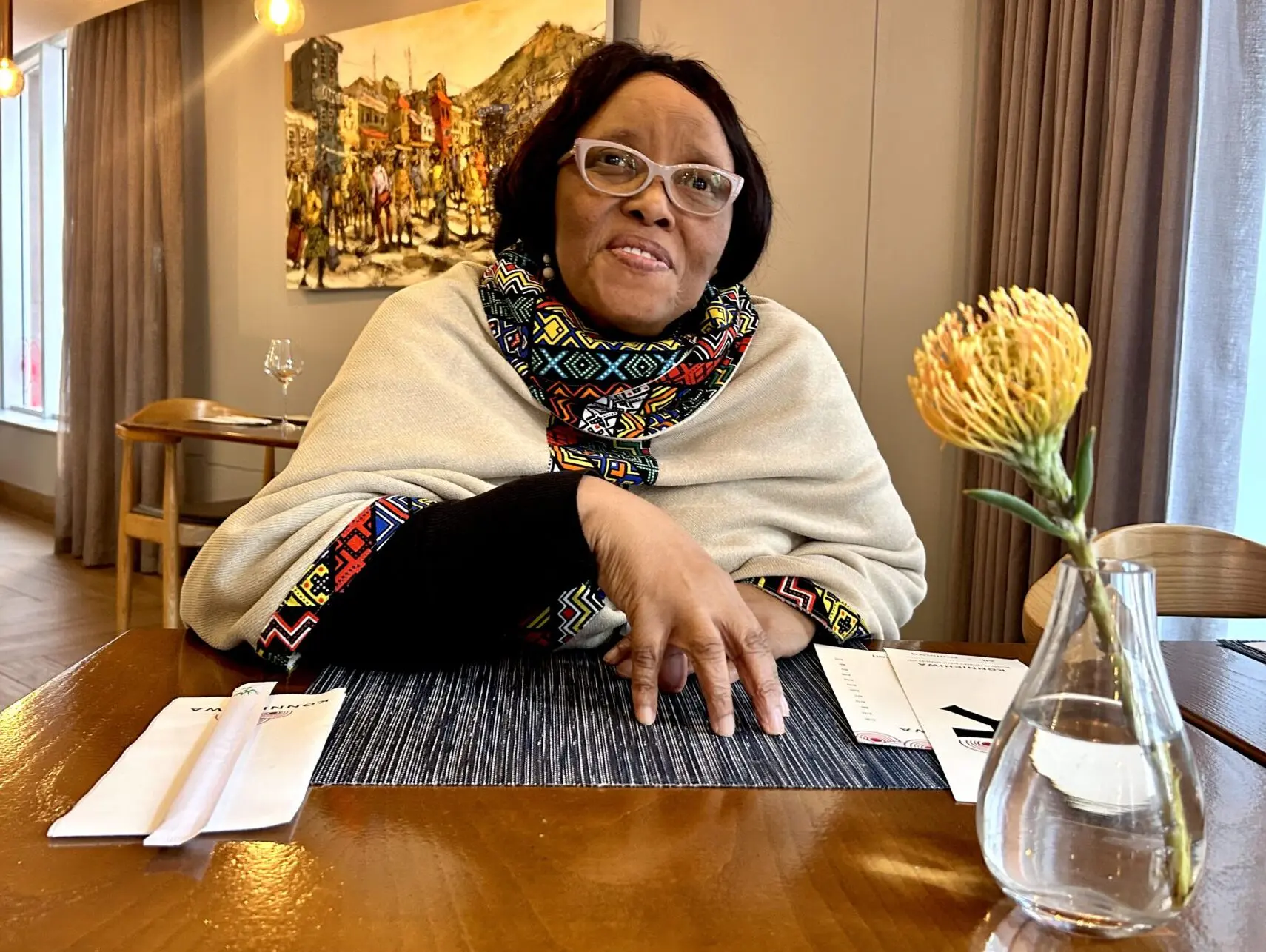 TIME magazine named Precious Matsoso on both its TIME 100 Health 2026 and 100 Most Influential People in the World 2026 lists. (Photo: Biénne Huisman/Spotlight)
Precious Matsoso tells Spotlight how, over three decades, she helped shape some of the most consequential health policy negotiations in South Africa and in global governance. She also shares memories about her Soweto childhood filled with music, science, and political uprisings.
Leading negotiations on the world’s first pandemic treaty, South African health policy trailblazer Precious Matsoso dealt with “occasional adversarial and intense engagements” by bursting into song. In her melodious church voice, Matsoso sang All you need is love by The Beatles, imparting a message of co-operation to delegates from 194 countries gathered in Geneva, the headquarters of the World Health Organisation (WHO).
She recalls: “It was very funny because a Brazilian delegate was saying, ‘Why are we treating each other like this?’ And that’s when I sang that song.” There was also a moment, she says, where she sang the theme song of the movie Mission Impossible.
After thirty years of negotiating health policy on national and global levels, Matsoso says: “When elephants fight, the grass suffers. Here, patients suffer.” She is referring to vulnerable sick people slipping between the cracks, with life-and-death stakes, as health sector stakeholders clash.
Following her three-year tenure as co-chair of the International Negotiating Body for the WHO Pandemic Agreement, earlier this year TIME magazine named Matsoso on both its TIME 100 Health 2026 and 100 Most Influential People in the World 2026 lists.
A collective refusal
In her acceptance speech, Matsoso distilled the aim of the pandemic treaty as “a collective refusal to repeat the devastation and inequities we witnessed during COVID-19”.
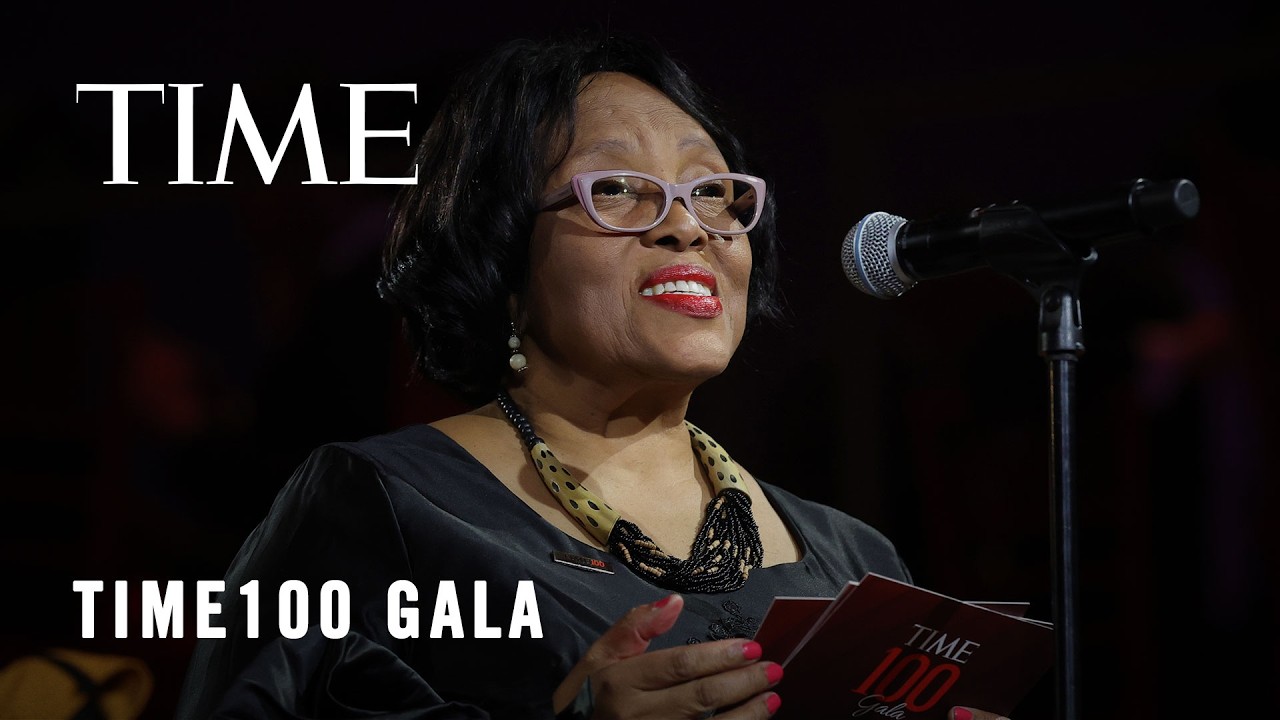
Driven by the memory of how African countries were pushed to the back of the queue for diagnostics, protective equipment and medicine during COVID-19, the deliberations saw her speak up for equitable access to (and local manufacturing of) pandemic-related health products.
In her speech following the TIME accolades, she added: “[The world] had vaccines in just under a year, an unprecedented achievement in research and development. But half the world, notably Africa, lacked access to diagnostics, therapeutics, and vaccines. That was not an accident. That system was designed for charity after the fact, not equity from the start.”
This, she said, is what the pandemic agreement intends to fix.
The pandemic treaty was adopted in May 2025 with a working group still drafting final aspects such as an annex on “pathogen access and benefit sharing”. According to a WHO statement in July, this is “a system that enables the rapid sharing of pathogens with pandemic potential while ensuring the fair and equitable sharing of benefits arising from their use, including pandemic vaccines, diagnostics, and therapeutics.” To Spotlight, Matsoso says this final section is “arguably the most important test of whether global health rules can alter power relations”.
Our interview is happening inside a central city hotel near the Cape Town International Convention Center, where earlier in the day she delivered a plenary speech on the pandemic treaty at the World Congress on Public Health.
Matsoso’s CV is a long document detailing countless leadership roles in South Africa and at global health bodies, and many awards over the years, including the South African Medical Research Council’s Lifetime Achievement Award last year.
Presently, she heads the Health Regulatory Science Platform at the University of the Witwatersrand, where she works adjacent to Professor Helen Rees, founder and director of the Wits Reproductive Health and HIV Institute and chair of the South African Health Products Regulatory Authority. The two collaborated in the past, shaping South Africa’s medicine landscape in the time of HIV and AIDS denialism.
Soweto childhood filled with music, science and uprisings
Across a pin-cushion protea in a vase, Matsoso recounts her Soweto childhood: how it was filled with music and science. Her father, a self-taught mechanic, and her mother, a maths teacher, loved music and their home echoed with anything from Bach and Tchaikovsky to The Beatles and Tom Jones, she says.
At 15-years-old Matsoso witnessed the 1976 Soweto student uprisings, she says, a pivotal moment that forced her into early political consciousness. In high school, she relished science and particularly chemistry, which she excelled at and taught to her classmates. “There was somebody called William Smith who used to run Star School [science supplements published in The Star newspaper], it was incredible,” she says.
“He made organic chemistry easy. I loved chemistry very much, but also wanted to be in the health sector. And so pharmacy was the nearest thing.”
Matsoso turned down a bursary in computer science at the University of the North in Polokwane (now the University of Limpopo), in favour of studying toward a Bachelor of Pharmacy at the same university, thanks to funding from a family friend in Soweto. But soon campus politics would force her to Cape Town, where she finished her degree at the University of the Western Cape. Reflecting on student uprisings and her activism at the time, Matsoso says: “The police were looking for us, we were on the run. It was a very sad time, I lost my friend, they killed her during detention.”
In time, her other qualifications would include a diploma in Health Management from the University of Cape Town and a Master of Laws in Healthcare Law and Ethics from the University of Dundee in Scotland.
Health reforms and AIDS denialism
In 1995, after having worked as a public sector pharmacist, including at Chris Hani Baragwanath Academic Hospital in Soweto, and in the private sector as a pharmacy owner, Matsoso was recruited to head pharmaceutical services at the newly established National Department of Health under then health minister Dr Nkosazana Dlamini-Zuma.
Here, Matsoso was in charge of managing drug procurement for the public sector, formalising South Africa’s National Drug Policy in 1996, and also for compiling the country’s Essential Medicines List that same year. With pride she recounts: “I was appointed in 1995, and the Essential Medicines List was produced in 1996. The very first one. And since, it has grown from strength to strength.” The Essential Medicines List is a list of medicines that are considered vital for the health of the country, like antiretrovirals or insulin. The health department undertakes to supply medicines on this list to the public health sector, normally via tenders.
Related Posts
In 1998, she stepped into the demanding role of registrar of the Medicines Control Council, today called the South African Health Products Regulatory Authority. Her appointment followed what some described as a purge of senior leadership at the MCC in early 1998. Highly respected leaders like Peter Folb and Johan Schlebusch were forced out following their decision to suspend a clinical trial of Virodene, a toxic industrial solvent pushed by a group of Pretoria researchers as a cure for HIV. (The affair is set out in detail in chapter 8 of Nathan Geffen’s book Debunking Delusions.)
To Spotlight, Matsoso relays four highlights of her time as registrar of the MCC.
Firstly, she says she refused to register Virodene.“[Professor] Helen Rees was the chair [of the Medicines Control Council] at the time and I was the registrar. I refused. So we didn’t register it,” says Matsoso.
Secondly, she says she approved the antiretroviral Nevirapine for the prevention of mother-to-child transmission of HIV and thirdly she granted “special permission” for the import of Daphnach, the generic antifungal used to treat oral thrush which often leaves people living with advanced HIV unable to swallow or eat. “The tablets that Zackie Achmat and them [AIDS activists with the Treatment Action Campaign] brought into the country from Thailand, those were difficult times,” she says, chuckling dryly.
And fourth – “the most significant and which almost got me into trouble, was that the MSF [Médecins Sans Frontières] wanted to conduct a study using cheaper generic antiretrovirals in Khayelitsha. So I approved it, and I was told to withdraw the approval by [then] trade and industry minister Alec Erwin. And I said ‘well, there’s nothing in the law that says I must withdraw.’”
Early PEPFAR negotiations
In 2003, Matsoso was involved in negotiations around the establishment of the United States President’s Emergency Plan for AIDS Relief (PEPFAR), an aid initiative estimated to have helped save in the region of 26 million lives. The Trump administration has over the last year and a half scaled PEPFAR back dramatically.
Matsoso recalls chairing a meeting on the creation of PEPFAR in Gaborone, Botswana: “During the Bush era [former American president George W. Bush], there were debates about why the US was establishing a parallel process when we had the Global Fund. I was chairing, and civil society and the US government were fighting in the room. I said: ‘I’m going to kick all of you out of this room, because this meeting is about HIV/AIDS. We are not going to do this in my meeting.’ So I was very firm. And the meeting was a big success.”
The global stage beckons
Eventually she was forced out of her job at the MCC. “So whilst I was busy, I get a call on behalf of minister Manto [then health minister Dr Manto Tshabalala-Msimang] that I’m basically fired. I think it was just harassment. But anyway, I applied for a job at the WHO as a director of Public Health Innovation and Intellectual Property. That’s why I left and I went to Geneva for six and a half years.” She took along her children, then aged 18, 15 and 13, saying: “My sons and daughter were able to integrate, making friends with children from different parts of the world.”
In this role, Matsoso remembers chairing negotiations through the night to establish a health emergency programme, post-Ebola: “It was difficult. We negotiated through the night for two days. On the first day, we finished at about 21:00; on the second day at about 06:00…”
A new health minister
Back in South Africa in 2010, Matsoso was appointed director-general of the country’s health department under the new health minister, Dr Aaron Motsoaledi – a job she would stay in until 2019. This saw her commute between the administrative offices in Pretoria and Parliament in Cape Town up to twice a week. A highlight of this time, she says, was driving the establishment of South Africa’s first independent Health Ombud within the Office of Health Standards Compliance. In 2016, Professor Malegapuru Makgoba would assume this role. He has since been succeeded by Professor Taole Mokoena.
Reflecting on creating new health policy, she says: “In legislative drafting, political parties rarely agree. Because you introduce the law, you have to defend it, sell it, and get them to support the legislation. It’s a different set of skills. Sometimes you face people with limited technical understanding who speak politically. You have to maintain your cool, be patient, and help them understand. In both multilateral and national settings, there is one key ingredient: patience. You must be patient.”
Afterhours
Given her negotiating skills, where does her grasp of humanity stem from? “Well, I go to church,” says Matsoso.
“I’m very spiritual, people don’t know this because it’s my private space. I also have a group of women that I work with. We have an orphanage that we support in Atteridgeville [a township in Pretoria]. So we’ve seen those children grow up. At the end of each year, we throw them a Christmas party and buy them clothes.”
The well-traveled health diplomat cites some of her favourite countries to visit as Zambia and Japan. Reading and books are central, too. “So in my bedroom, I have shelves of books within easy reach. This is apart from the bookshelves in my study,” she says.
Earlier this year, Matsoso ended her TIME magazine acceptance speech with words that might well capture her ethos: “To science that is rigorous and accessible,” she said. “To policy grounded in evidence and empathy, and to global health systems where every frontline worker is protected, and to a fairer and safer world.”
