
“At the clinic … you can feel them staring” – How specialised services are helping trans people in George
 The TB HIV Care team inside the George office. Originally founded in 1929 to focus on TB and later expanding into HIV, TB HIV Care has been working with key populations since 2011. (Photo: Nasief Manie/Spotlight)
 In the Western Cape’s second largest city, an NGO offers safe, private HIV services to men who have sex with men and transgender people. Spotlight met with some of the people using these services, and found TB HIV Care already providing relief from the hostile reactions trans people sometimes experience in government clinics.
“Let me tell you why I don’t go to the clinic anymore,” says Layah Lamoore. “As a transgender woman, when you sit in the waiting room, you can hear people whispering to each other about you. They say things like ‘what’s that thing doing here? Maybe she’s sick or has HIV.’ You can feel them staring at you and making jokes.”
The 32-year-old is one of several trans women talking to Spotlight in an office in George, situated in the scenic Garden Route, about their experience being trans in the Western Cape’s second largest city. Dressed in a white trouser suit and high heels, she shares that she loves modelling, pageants, and playing netball.
“I need to go to the clinic like everybody else, but whenever I go, I feel like an outsider,” she says.

We are meeting in an industrial area where the NGO, TB HIV Care, recently introduced a range of HIV services aimed at men who have sex with men (MSM) and transgender people.
Ender Celebi also struggles whenever she has to navigate a trip to the clinic. For this 17-year-old from Blanco, wearing a black maxi-dress with a crown resting neatly on her long blonde hair, it’s the harsh comments from the community that are hard to deal with.
“Recently, when I came out of the clinic. I heard someone say, ‘the moffie has taken his HIV medication again’. People make assumptions. I ignore them and walk away.” She adds:
“I’ve been threatened by the bully bags a few times at taverns and clubs, but I don’t like drama.”
Cuisha Vonteez, a 21-year-old seasonal farmworker, is also accustomed to being called hurtful names. Although she’s respected at work, she says she arrived at a night club recently, dressed, as she usually is, as a woman and was told by security to ‘go home and dress properly’. That was one of many aggressions she’s experienced being trans. Similarly, she doesn’t feel safe to go to a clinic, she tells Spotlight.
Frankie Siwisa, also a trans woman, says “clinics are a no for me.” The 37-year-old adds: “Whatever illness you’re there for, they’ll say, ‘it’s because you are gay’ or ‘it’s because you are busy sleeping with men.’”
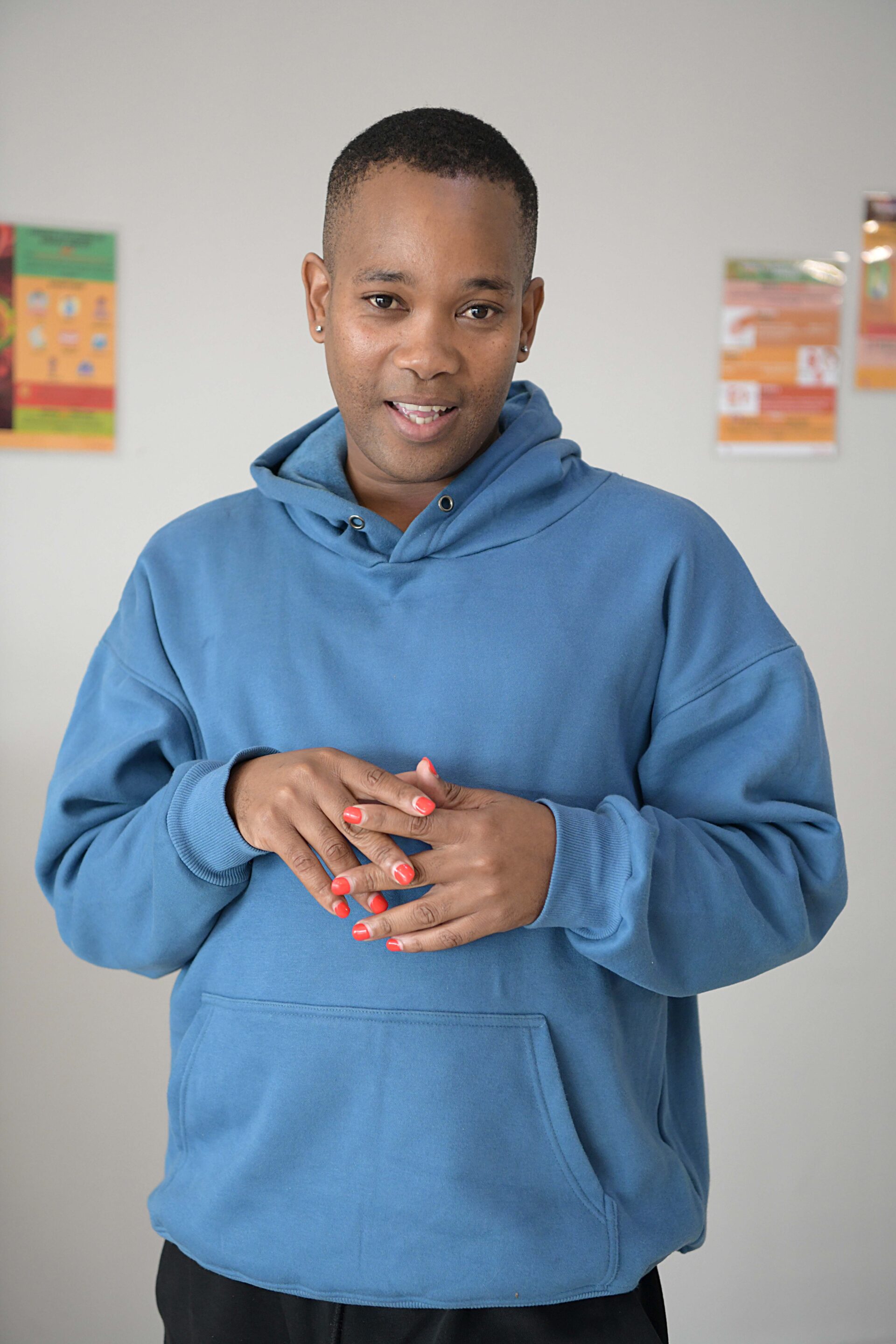
Her last visit to the clinic, she recalls, was an ordeal from beginning to end. “It was October last year. I arrived at the gate, and I had to fill in the form at security.… and I was writing my name as Miss. But the security guy kept addressing me as a ‘he’. He said, ‘but you are Mister’. And I said ‘but I am Miss. I am wearing a dress.’
A safe space to be “myself”
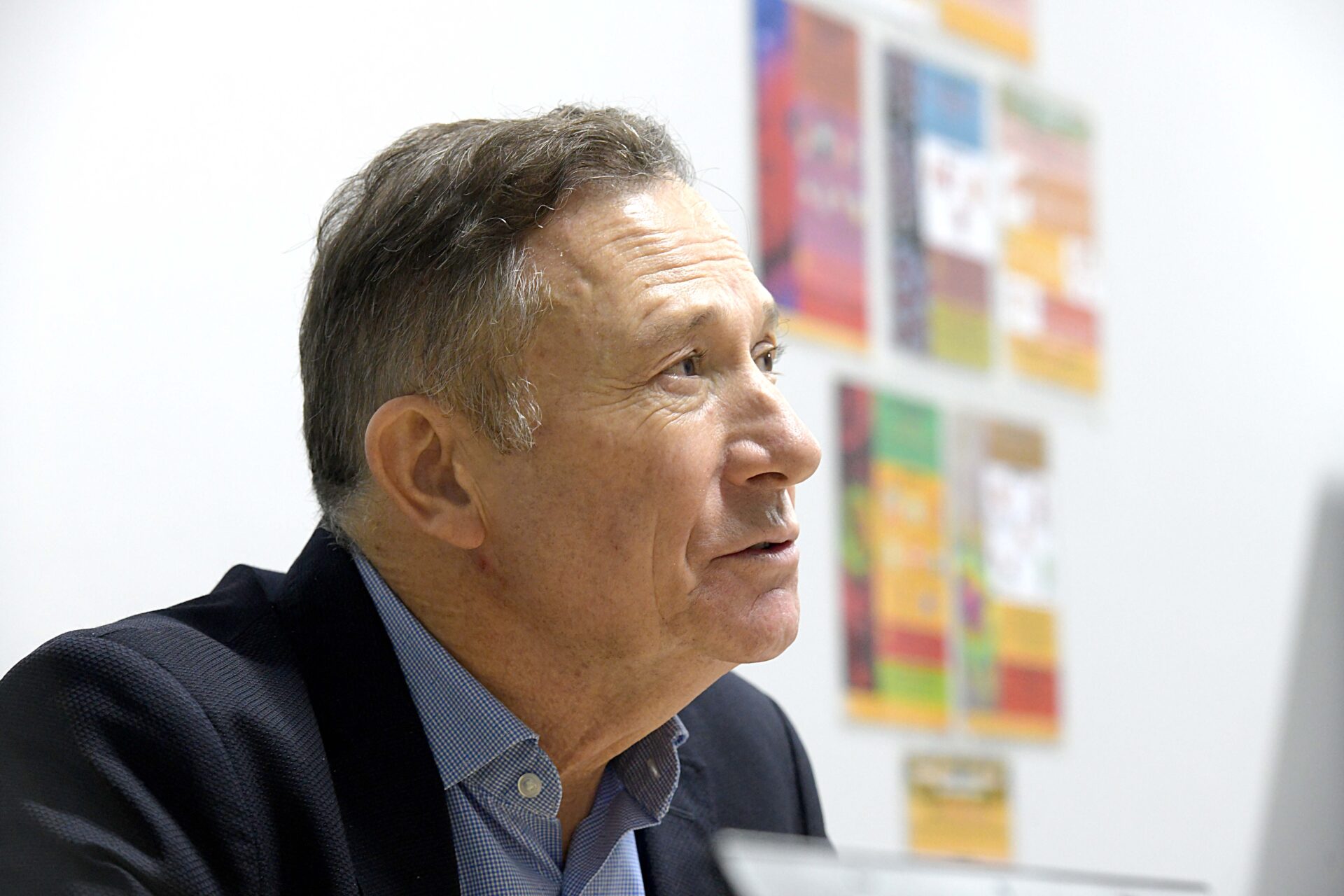
“We recognise that we can’t expect these populations to come to normal public healthcare facilities because of the stigma and discrimination that they experience, as well as the long waiting times,” says Professor Harry Hausler, chief executive officer of TB HIV Care.
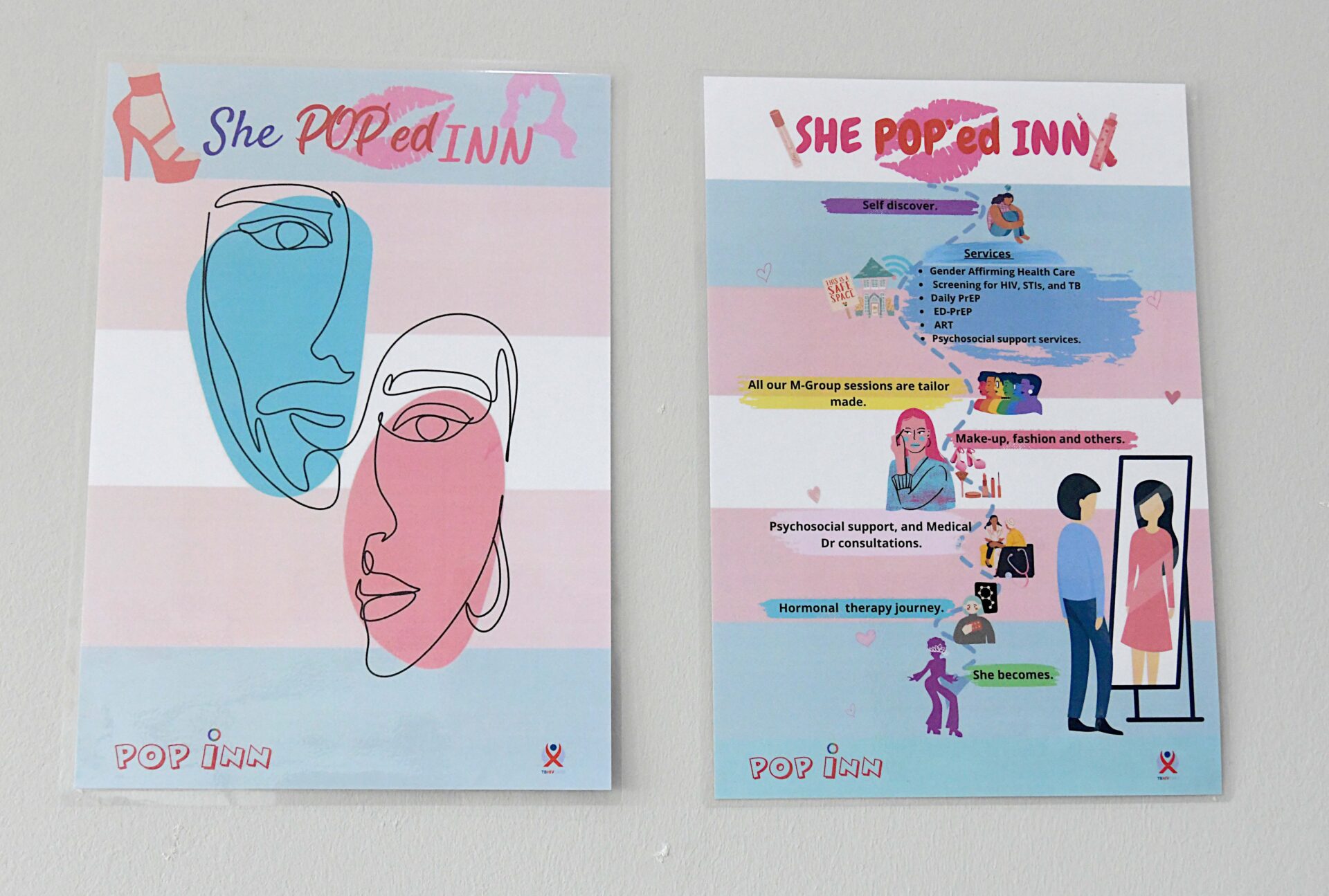
“So, we’ve developed a drop-in centre, a safe space which is a small clinic where people can come for testing and treatment services … but also as a place where they can come to relax,” he says.
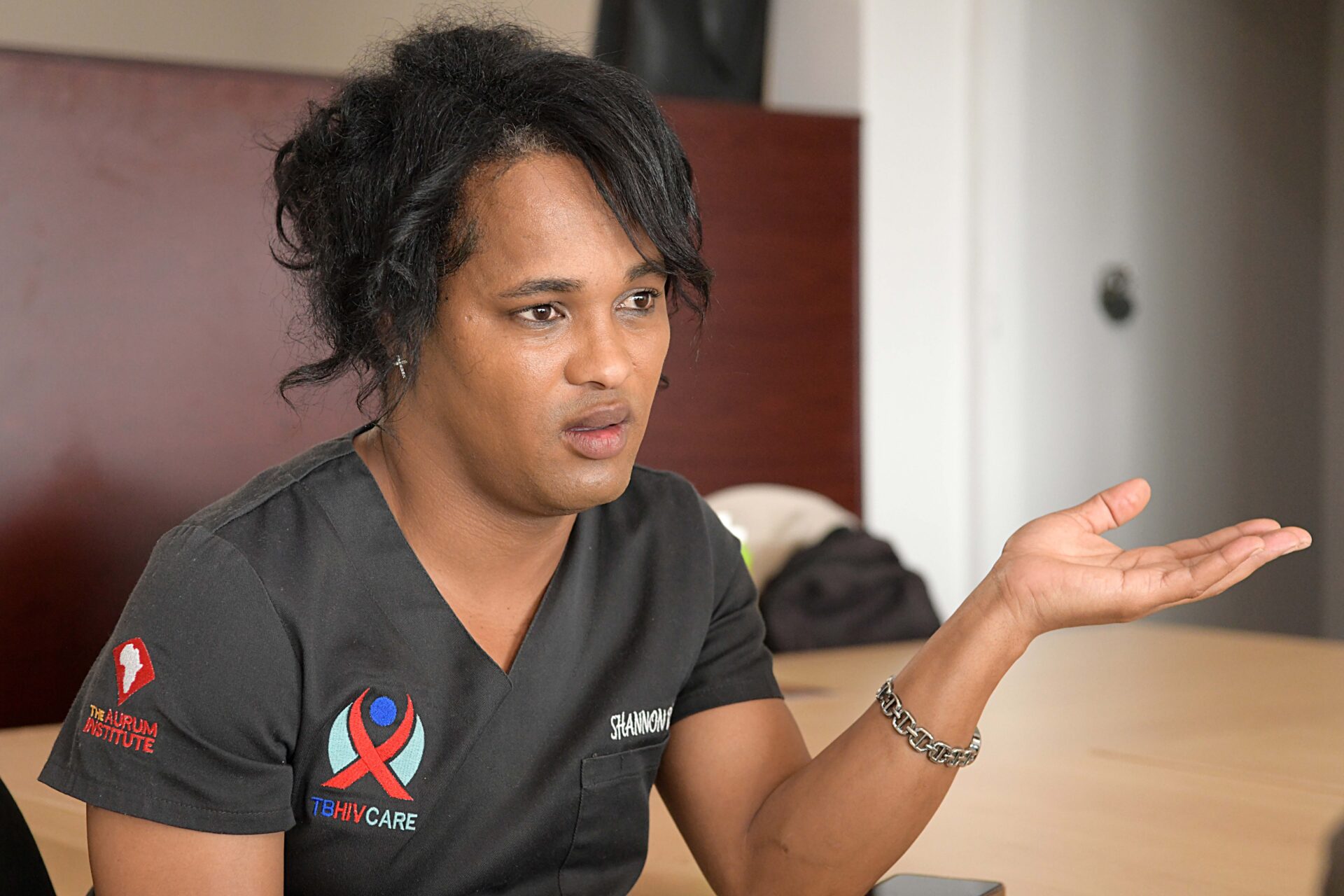
“I feel safe to talk and ask questions when I come here,” says Lamoore. She says she learnt about TB HIV Care from two staff members, including peer educator Shannon Damons, who attended a modelling show in Parkdene, George. More than a beauty pageant for trans men and trans women, Damons says the initiative aimed to identify and train ambassadors that would go on to represent and raise awareness about the rights of trans people in broader society.
Celebi describes Damons as her favourite counsellor. “She’s a transgender individual and a pageant queen, like me. She was the person from TB HIV Care who approached me.” She continues:
“You can speak without feeling ashamed because you’re talking to a person that’s going through the same stuff as you do.
“She explained everything about TB and HIV, and I was like, wow, there’s another safe space for me that isn’t the clinic. I’m happy about it because there are no other organisations in George doing this for the LGBTQI Plus community.”
Damons says her personal experiences of going to the clinics helps her to counsel the clients she works with. “I almost stigmatise myself before I go. I am already scared of what people will say. So I don’t use the facilities. I’d rather go straight to an organisation like this, where I won’t be discriminated. And where I will be called Shannon.”
Key populations are specific vulnerable or marginalised groups who are disproportionately impacted by HIV, tuberculosis and other diseases and who face serious hurdles in accessing the healthcare they need. Besides MSM and transgender people, they include sex workers, people who inject drugs, and people in prisons and other closed settings.
A hotspot needing HIV services for key populations
Originally founded in 1929 to focus on TB and later expanding into HIV, TB HIV Care has been working with key populations since 2011.
Speaking to Spotlight at the NGO’s new George premises, Hausler says George was flagged as a hotspot for MSM and trans people needing tailored, specialised services in HIV prevention, treatment, and human rights services.
“We had to do hotspot mapping first to find out where these people congregate,” he says.
Hausler says TB HIV Care is one of several implementing partners delivering a Global Fund-supported programme, with The Aurum Institute serving as the primary recipient.
“The programme is implemented at scale across selected districts in the Eastern Cape, Free State, KwaZulu-Natal, Limpopo, Mpumalanga, Gauteng, North West, and the Western Cape,” he says. TB HIV Care is also implementing services for MSM in Mthatha, and, in Cape Town, for both MSM and trans people.
Hausler says the model which the NGO uses for delivering services to key populations is a peer-led mobile outreach approach. In addition to the drop-in clinic, he says the NGO has introduced a fully equipped mobile clinic unit, which functions as a primary healthcare consulting room on wheels. “[It] takes services directly into communities, particularly those in remote areas or where people may not feel comfortable accessing healthcare through conventional facilities,” he says.
“To really reach key populations, it’s crucial to have people from that population as frontline staff,” he says.
“They already have their own networks within the community, and when engaging with our clients, they make them feel really comfortable.”
He adds: “The peers provide initial HIV prevention education. And then they say, ‘well, if you’re interested in learning your status, you can come to us at the mobile clinic or the drop-in centre – and then they access those services.”
Working with government facilities
Prince Mathe, who oversees the programme in George, says they kicked off with limited services in January, and have since expanded to offer a range of HIV prevention and healthcare services. These include HIV prevention education and risk reduction counselling, HIV testing, and STI screening and management. They also distribute condoms and lubricant.
“We work in close collaboration with public primary healthcare facilities”, says Mathe, explaining that clients who are eligible for antiretrovirals for HIV prevention or treatment are referred and linked to partner facilities where treatment is initiated.
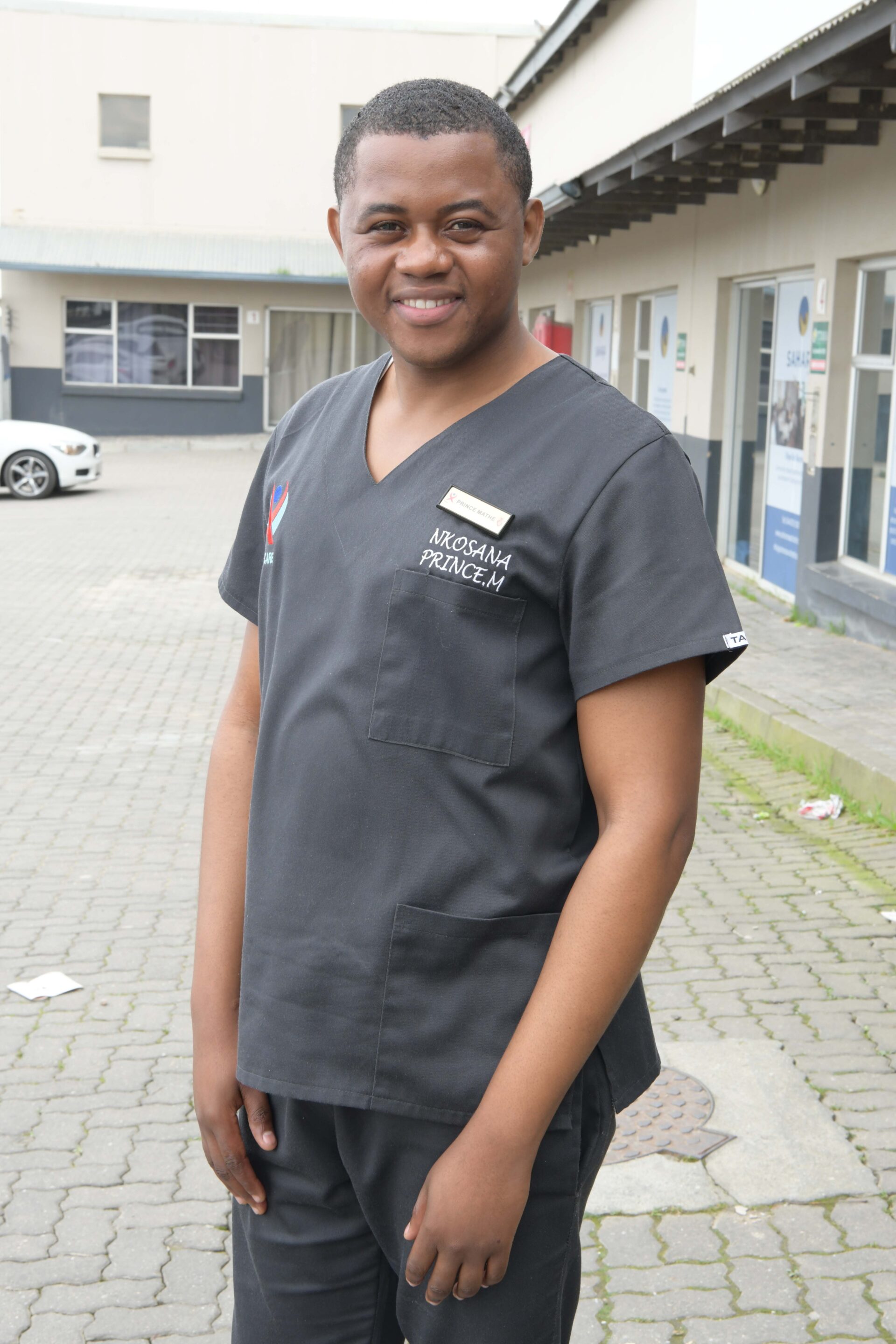
The NGO, Hausler adds, is building on its good relationship with the department of health in the district to offer these referral services which are in fact “an extension of the department which can reach out to the hard-to-reach populations”.
Mathe says: “Beyond clinical services, we are placing a strong emphasis on community engagement and creating safer environments for key populations.” The NGO also offers psychosocial support as well as education on human rights and paralegal assistance to clients who experience discrimination, violence or stigma.
He says that they’ve already run some community dialogues focusing on human rights and legal literacy. The NGO also plans to run sensitisation sessions with staff at health facilities and the local police, ward councillors and community leaders to improve acceptance of key populations.
A critical moment
According to TB HIV Care, the programme comes at a critical moment for South Africa’s HIV response. Other HIV experts interviewed by Spotlight over the last year have been similarly concerned about the state of the country’s HIV response in the wake of the abrupt withdrawal of much health aid from the United States. Among others, those aid withdrawals have led to the closure of some MSM-focussed clinics. It is not clear whether the new Global Fund funding for these services came as a result of those closures.
According to the latest outputs from Thembisa, the leading mathematical model of HIV in South Africa, around 32% of the roughly 800 000 MSM in the country aged 18 years and older are living with HIV. This is much higher than the rate in men in general – 12% of the 22 to 23 million men aged 15 and older in South Africa.
Related Posts
While new HIV infections among MSM have nearly halved over the past decade, TB HIV Care say “tens of thousands of men continue to face high vulnerability, compounded by homophobia, discrimination, sexual and gender-based violence, hate crimes, economic exclusion, and the hidden nature of non-gay-identifying sexual networks”.
There are an estimated 89 000 transgender women in South Africa, according to Thembisa. Close to half (47%) of these people are estimated to be living with HIV.
Finding the men
Later in the afternoon, Spotlight joins the TB HIV Care team on an outreach in the Thembalethu township. This time their target is MSM, and the aim is to encourage them to enrol with the NGO to access their services.
TB HIV Care counsellor Ncumisa Nkonjane says that it’s difficult to reach MSM because they are generally discreet. Not all MSM identify as gay and some are married to women.
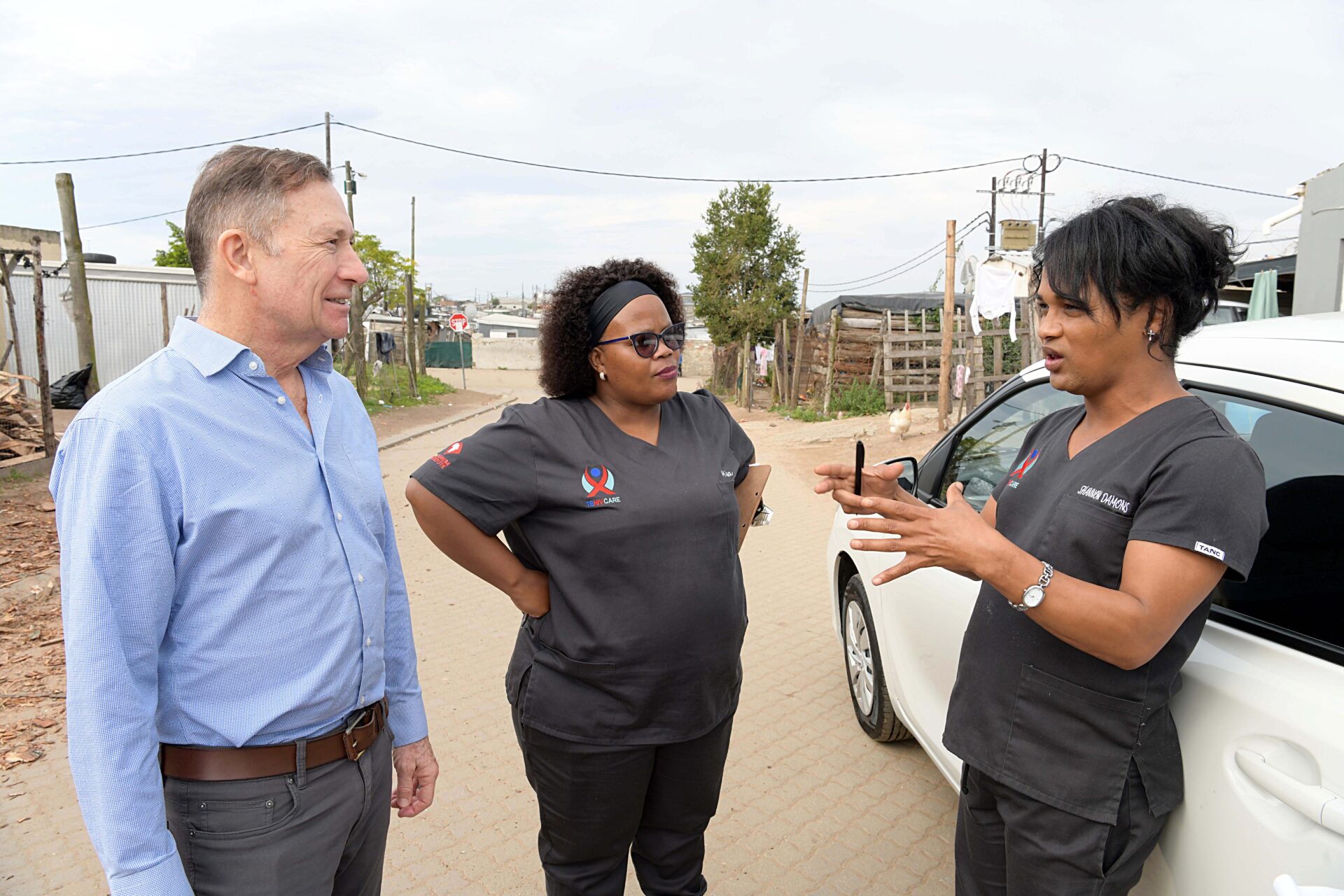
The team stops at a spaza shop in Zone 8, where a group of men are chatting outside. In a friendly, casual interaction, they introduce themselves and tell the men about the organisation and its services. If the men show interest, the TB HIV Care team record their details on their tablets. If men want to talk privately or ask more questions, they are given a WhatsApp number and invited to visit the drop-in centre where there’s a nurse every day.
“If they want to be part of our programme, we enrol them right away on the tablets we carry with us. We get their details and give them a prepack of lubricants and condoms. We give them an informal briefing about TB, HIV and STIs and ask them questions to identify if any of them are at risk of contracting HIV,” says Nkonjane.
“We ask them when they last had an HIV test; whether they know their status; whether they’re on ARVs; whether they have a partner, and if they use condoms. We ask them if they know about PrEP and other preventative measures…”
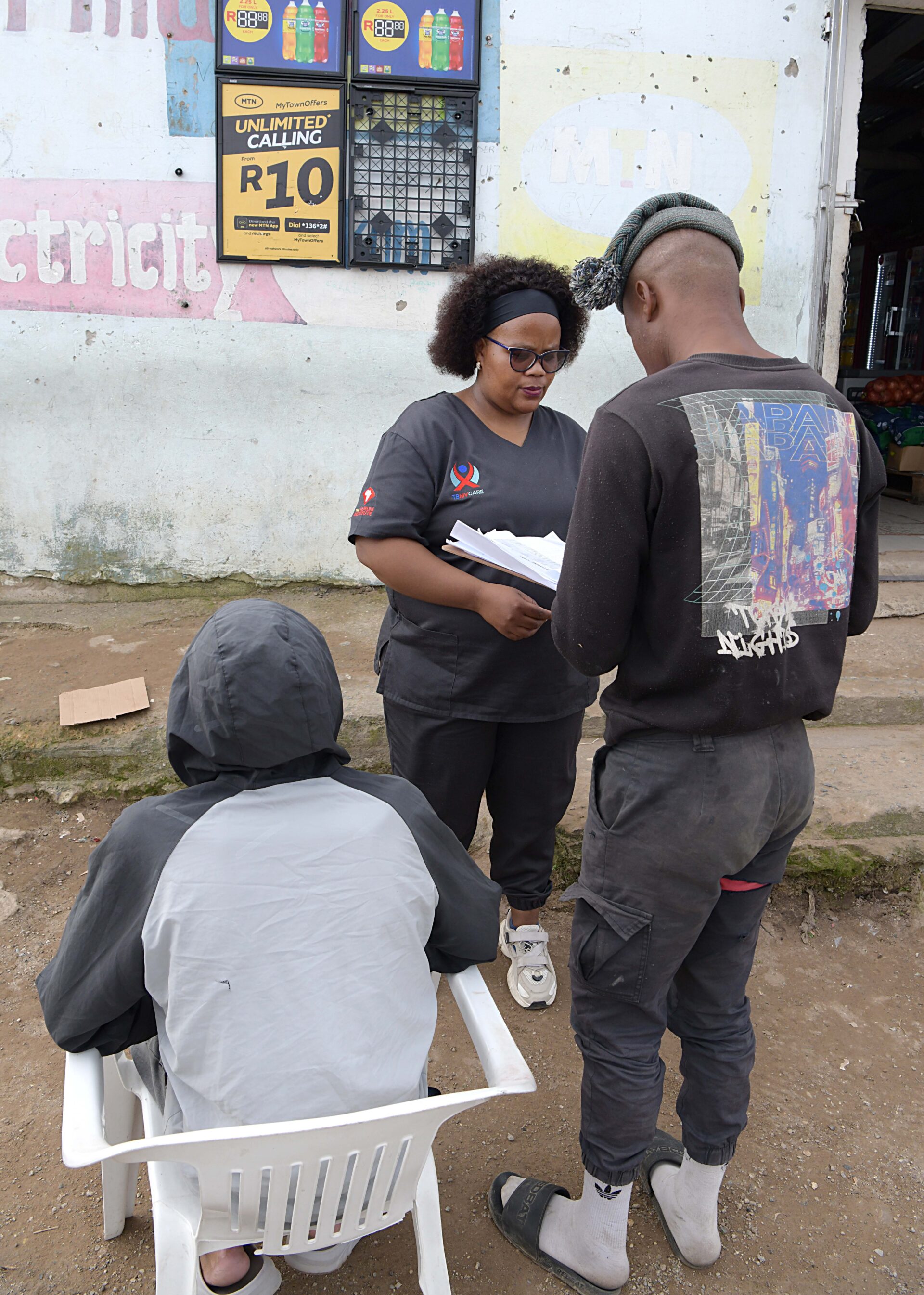
Our next stop is at a tavern in a busy street in New Valley. The team does the same drill with the men chatting outside. These regular outreaches create a familiarity, says Mathe, and encourage men to willingly take their health into their own hands.
Since starting the work about 6 months ago, Mathe says TB HIV Care has seen encouraging community engagement, and a growing willingness among community members to access services and participate in discussions around health and human rights.
“Ultimately, our goal is to leave behind more than a successful project. We want to strengthen the local health system, empower communities with knowledge, improve access to prevention services, and ensure that people continue receiving care with dignity and confidence long after the grant has concluded,” he says.
Note: While Spotlight has the legal names of the trans people quoted in this article, we have opted to publish only their chosen names.
